
 Multiple Faces Detected


 March 18th, 2025
In the digital world, anyone can claim to be anyone. But what happens when these claims are designed to deceive you? Scammers are experts at creating fake stories to prey on trust, emotions, and even fear.
With government impersonation scams alone racking up $20 million in losses in just the first quarter of 2024, it’s clear that these deceptive tactics are on the rise.
In this article, we’ll discuss what are fake stories scammers use, touching on the psychological tricks they rely on to manipulate victims, as well as the warning signs that can help you stay protected.
By the end, you’ll have the tools you need to recognize scams and safeguard yourself from falling into their trap.
Common Fake Stories Scammers Use

Scammers often create fake personas to gain their victims’ trust and manipulate them into taking action.
Here are some of the common fake personas scammers use online:
Government Officials
Scammers pose as officials from organizations like the IRS, tax authorities, or law enforcement, claiming the victim owes money, missed important duties, or faces arrest unless they act immediately. These scammers typically demand payment or personal information.
Romantic Partners
Scammers often create fake profiles online, building emotional connections with victims over time. They may present themselves as someone looking for love, but their true goal is to manipulate their target for money.
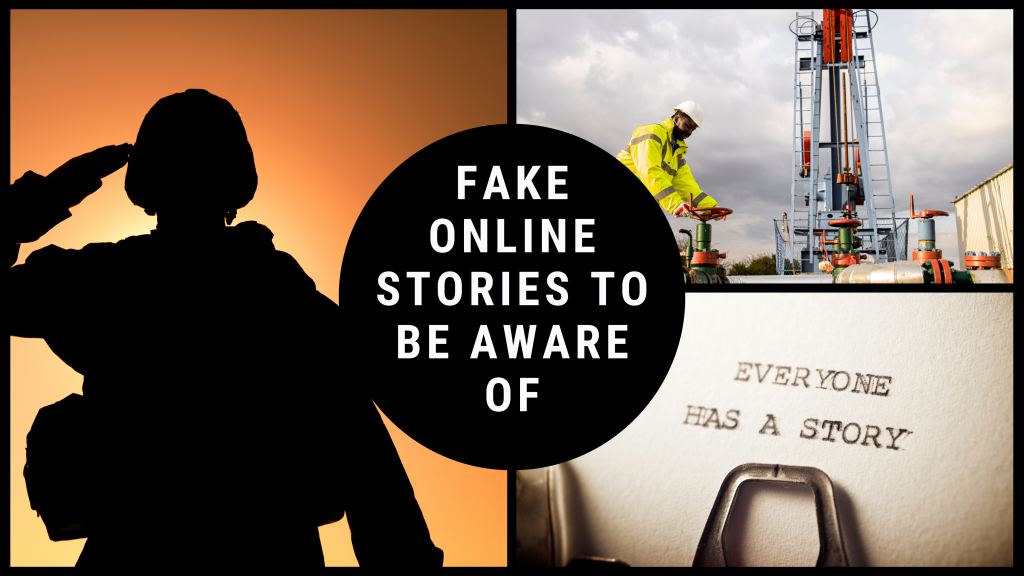
One common variation of this is the oil rig scam, where the scammer pretends to be a worker on an oil rig, often claiming they are stuck overseas and in need of financial help to return home or cover an emergency expense.
Military Personnel
Scammers impersonate soldiers or military personnel, often claiming to be stationed overseas. They may say they need financial help to cover travel or medical expenses, preying on the victim’s sympathy and sense of duty.
Charity Workers
Scammers may pretend to be representatives from a charity, asking for donations to a cause in need. They often leverage current events, like natural disasters or humanitarian crises, to make their request seem urgent and heartfelt.
Job Recruiters
According to the Identity Theft Resource Center, job scam reports surged by a staggering 118% in 2023 compared to the previous year. By using fake profiles and fake job listings on platforms like LinkedIn, scammers can lure victims into providing personal information or paying for supposed background checks, training, or hiring fees.
Tactics Scammers Use to Manipulate Victims
Scammers rely on a variety of psychological tactics to manipulate victims, making it easier to exploit their trust and emotions. Here are the key strategies they use:
- Urgency and Pressure: A false sense of urgency is created by scammers to push victims into acting quickly without thinking. They often threaten immediate consequences or set tight deadlines to build pressure.
- Emotional Manipulation: Oftentimes, fraudsters begin their scam by preying on the victim’s emotions, using fear, sympathy, or love to lower their guard. They might invent a medical emergency or tell a heartbreaking story about a loved one in danger, making the victim feel compelled to help or send money.
- Fake Rewards or Opportunities: Scammers promise rewards or exclusive opportunities that seem too good to be true, often playing on greed. They may claim you’ve won a lottery, are eligible for a huge discount, or have exclusive access to adult content online which is fake or stolen, tricking you into giving out personal details or making payments upfront.
- Isolation and Dependency: By claiming to be the only person who can help or that no one else can be trusted, scammers work to isolate the victim. This tactic fosters dependency, making the victim more likely to trust the scammer and comply with their demands.
Warning Signs to Look Out For
Scammers are experts at disguising their intentions, but there are common red flags that can help you spot a scam before it’s too late. Here are some key warning signs to keep an eye out for:
Unsolicited Contact
Always be cautious when you receive unexpected messages, calls, or emails from someone you don’t know. Scammers often initiate contact out of the blue, posing as representatives of trusted organizations or individuals.
They may claim to be from banks, government agencies, or even family members in distress. Since these unsolicited messages aim to catch you off guard, verifying their authenticity is important before responding.
Unrealistic Rewards
If an offer sounds too good to be true, it probably is. Scammers often promise huge rewards that appeal to your greed or excitement. Be wary of claims like “You’ve won a huge prize!” or “Earn thousands with minimal effort.” These offers usually end with the scammer asking for money or personal details upfront.
Requests for Personal Information or Payment
Scammers often ask for sensitive information or payment before providing any goods or services. If you’re asked to wire money, share your credit card information, or give personal details like your social security number or bank account, proceed with caution. Legitimate businesses will never demand payment or personal data without clear justification.
Inconsistent or Vague Details
Scammers often provide unclear or conflicting information to avoid detection. For instance, they might give vague explanations about how a prize was won or how an emergency unfolded. Look for inconsistencies, such as missing phone numbers, generic email addresses, or poor grammar, which are signs that the story may not be legitimate.
How to Protect Yourself from Scammers

Here are some practical steps you can take to stay safe from scammers:
- Keep Personal Information Private: Avoid sharing personal or financial details unless you’re certain the source is legitimate. Scammers often ask for sensitive information under the guise of a “necessary” step to resolve an issue.
- Never Send Money Upfront: If someone asks for money before providing any services or goods, it’s a red flag. Legitimate organizations won’t require payment in advance, especially for things like prizes or emergencies.
- Cross-Check Stories: If the story seems too good to be true, it probably is. Cross-check the details through trusted sources or by doing a reverse search online to see if others have reported similar scams.
- Trust Your Gut: If something feels off or doesn’t sit right with you, trust your instincts. Scammers rely on manipulating emotions, but you can stay safe by questioning what seems too easy or too urgent.
- Verify Identities: Use tools like Social Catfish to run reverse searches on images, emails, and phone numbers. This helps confirm whether the person you’re interacting with is who they claim to be.
Wrapping Up
Now that you’re armed with the knowledge of how scammers use fake stories to deceive, you’re in a better position to spot the signs and protect yourself. Staying vigilant and informed is your best defense against falling for these tricks.
To stay even safer, use our search specialist service. You can easily check the authenticity of online profiles, helping you avoid scams before they even start. It’s a smart, simple way to protect yourself and verify the people you’re interacting with online.