 Multiple Faces Detected


 December 31st, 2024
What is the Dark Web?

What is the dark web? You may ask. The dark web is a hidden portion of the internet that requires specialized browsers, such as Tor, to access. Regular browsers lack the advanced features needed to explore this concealed network. While many associate the dark web solely with illegal activities, it also hosts legitimate uses, leveraging its robust anonymity features for secure communication and privacy-focused activities. Understanding the dark web helps demystify its dual nature, revealing both its risks and its potential for privacy-centric applications. Be careful when using the Dark Web because criminals like to use its features to hide their fraudulent activities.
Key Takeaways
- What is the dark web? Is it good or bad? The dark web can be both good and bad depending on how you decide to use it. It has sophisticated layers that encrypt and protect data from third-party access. Using it can help you hide your private information. However, it also exposes you to a wide range of risks.
- Malicious actors can only access your information if you are negligent. You need to take the necessary precautions to guard your network system and information. This strategy will make it difficult for scammers to obtain your data.
- You can use a wide range of sophisticated tools to protect your information. Antivirus and antimalware defenses can help you identify malicious activities immediately. Financial and identity theft tools such as Social Catfish can notify you if someone is misusing your information.
What You Need to Know
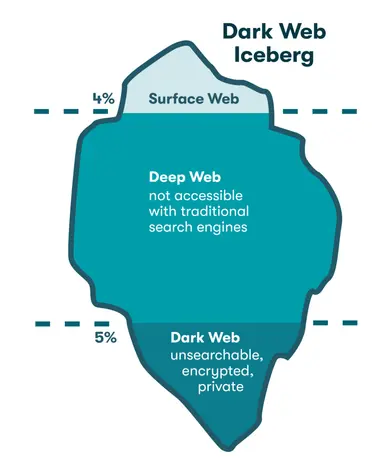
The internet is divided into two: the “visible” internet also called the open or surface web and the “non-visible” internet also known as the deep web. The open web makes up less than 5% of the whole internet. It accommodates websites and data that can be accessed using traditional browsers like Google Chrome, Firefox, and Internet Explorer.
The deep web, on the other hand, holds almost 90% of websites and data on the internet. This portion of the internet is large such that determining the number of simultaneously active pages and websites is impossible.
Special search engines such as Tor and DuckDuckGo access the deep web’s websites and pages. However, there are other data such as private databases and illicit content that are inaccessible without the right software. This part of the deep web is what we call The Dark Web.
If you visualize the internet like an iceberg as shown below, the part above the water would be the open web and the portion beneath the water would be the deep web. The bottommost part of the iceberg would be the dark web.
Elements of the Dark Web that Foster Its Powerful Anonymity Capability
When you dissect the dark web, you will notice that it has certain features that enable it to hide user’s information. They include:
1. Lack of webpage indexing by surface web browsers
You cannot access the dark web using traditional search engines like Google. It is constructed in a way that these browsers cannot discover and show its websites’ and pages’ data.
2. Use of randomized network infrastructure as virtual traffic tunnels
The dark web’s system is constructed such that data passes through randomly selected servers to cover the communication pathway. As a result, third parties cannot identify the origin or destination of your information.
3. Specialized registry operator that is incompatible with traditional browsers
What is the dark web? It operates using a unique domain registration system accessible only through specialized browsers, making it invisible to traditional search engines. Enhanced security measures like encryption and firewalls further boost its anonymity, creating a hidden layer of the internet.
Pros of Using The Dark Web

The dark web is usually linked to illegal or criminal activities. Most people selling illicit services and products often use the dark web because they know it hides their tracks. However, legal entities also make use of this system for the following reasons:
a). Encryption technology that fosters privacy
The Tor browser offers users the ability to protect their privacy. Unlike in the past when it was only used by hackers, cybercriminals, and law enforcement officers, anyone can now use it to hide their private data. Instead of using the usual path between your computer and the web, the Tor search engine uses a random route of encrypted servers, making it hard for hackers to keep up with your digital footprint.
b). User anonymity
People who can be in danger by revealing their real identities can use the dark web. For instance, political dissidents, victims of abuse and persecution, and whistleblowers can use the dark web without fear of being identified. Additionally, law enforcement and government agencies that work with classified information can also use the dark web to protect their data from breaches.
c). To take illegal actions against criminals
There are instances where people use the dark web to illegally protect other people. For example, in 2011, the BBC announced that the hacktivist group Anonymous flagged 40 sites on the dark web that sold child sex abuse content. It further published 1500 names of people using the site.
Cons of Using the Dark Web
The anonymity feature of the dark web can easily be exploited by people who want to conduct illegal activities. Criminals and malicious hackers like to act in the shadows. While it is not illegal to operate on the dark web, you can potentially find yourself in risky situations if you are not careful. Serious caution and a deep understanding of technology is a requirement if you want to stay safe. Some common disadvantages of using it include:
I). Malware
If you are using the dark web to explore websites and pages, you risk exposing your device to a malware infection. Hackers use unsafe computers and networks to bypass security. While the dark web framework and Tor browser foster powerful anonymity, any online activity can be accessed if your security is compromised. You risk exposing yourself to malware in the form of phishing, ransomware, and botnet among other malware attacks.
II). Government radar
Law enforcement globally has access to Tor-based sites. They use custom software that authorizes access to dark websites. They can identify people visiting dark websites even if they do not engage in any illegal activity. Visiting a site that is considered illegal by your country can place you under surveillance, and possibly make you a target of law enforcement.
III). Fraud
The dark web offers numerous illegal services such as human trafficking, child pornography, and even assassinations. Additionally, it is an avenue for scammers to take advantage of its reputation to rob users of large amounts of money. Some may attempt to steal your personal information and identity through phishing scams.
Maintaining Online Safety: What is the dark web?
Regardless of what you are doing on the dark web, you need to take necessary precautions to protect your personal information. Malicious actors can steal your personal information, misuse it by stealing your identity, or generate money by selling it to other criminals. The most common way to protect yourself is by installing anti-malware and antivirus defenses for secure end-user protection. These tools, however, are not enough to protect you when you access the dark web. The following key insights can help you:
a). Keep your guard up
To avoid becoming a victim of dark web scams or other online threats, it’s crucial to practice safe browsing habits. Always be cautious when talking to strangers, sharing your details, or visiting unfamiliar websites. These actions can expose you to phishing attempts and other online threats. If you ever find yourself in a suspicious situation, trust your instincts and exit immediately.
Moreover, it’s important to take proactive steps to safeguard your online presence. Services like Social Catfish offer specialized tools to help you monitor potential identity theft or financial fraud. Through our Search Specialist service, Social Catfish can track and uncover hidden identities, verifying the legitimacy of online connections and transactions. If you notice any unusual activities in your financial accounts or online interactions, their team of experts can assist you in investigating further.
Social Catfish provides a comprehensive approach to online security, combining advanced search tools with expert guidance to help you protect your identity and financial well-being.
Protect Yourself from Dark Web Threats Today
Stay safe online with Social Catfish and protect your identity from digital threats!
b). Use a different persona from your real identity
When you use the dark web, make sure to fabricate any information you provide. Do not use your real email, username, password, and credit card. Instead, create throwaway identifiers and accounts if it is a necessity. In addition, use the guest account on your computer to prevent the threat of malware exploiting your information.
c). Avoid downloading files
The dark web is a lawless territory. The risk of stumbling on malware is higher than in traditional browsers. In case you want to download something, make sure you use real-time antivirus scanning to identify infected files.
The Bottom Line: What is the Dark Web? Understanding Online Safety
Most people associate the dark web with criminal activities, but it also has legitimate uses. By leveraging its anonymity features, individuals and entities can cover digital footprints and maintain online privacy. However, scammers have exploited these capabilities, using the dark web to distribute malware, launch phishing attacks, and lure potential victims through malicious websites.
Understanding what is the dark web and its risks can help you stay protected. Tools like Social Catfish are invaluable in monitoring your identity and finances, ensuring no one is misusing your information. These tools can also help you identify vulnerabilities in your network or system, allowing you to take proactive measures to secure your online presence.