
 Multiple Faces Detected


 November 16th, 2025
You answer the phone. “This is the Social Security Administration,” the voice says. Your benefits are suspended. You need to act now.
Your heart races. But wait.
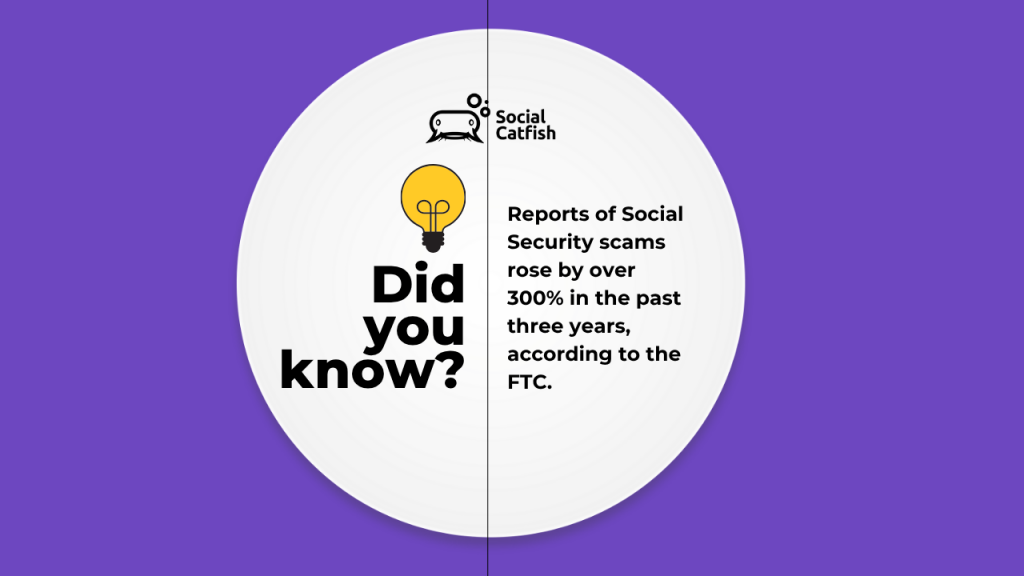
Here’s the truth: that call is probably a scam. A social security scam designed to steal your money or personal information. And you’re not alone. According to the Federal Trade Commission, people lost over $617 million to government imposter scams in 2023, with Social Security remaining the top target.
Scammers are getting smarter. They’re using new tactics in 2025 that feel more real than ever. But if you know what to watch for, you can protect yourself.
How Scammers Target You Through Email
Social security scam email attempts have become incredibly sophisticated. You might receive a message claiming to be from the Social Security Administration with an official-looking logo and urgent subject line.
These emails often say you need to “download your benefit statement immediately” or “verify your account within 48 hours.” The Social Security Administration’s Office of Inspector General warns that a new scam in 2025 involves fake emails with subject lines like “Claim Benefits!” designed to lure retirement applicants.
Here’s the problem: Social Security will NEVER send you emails with download links or requests to verify information. They communicate through your secure message center in your My Social Security account or by regular mail. That’s it.
A social security scam email might include:
- Fake sender addresses ending in .net or .com instead of .gov
- Grammar mistakes or awkward phrasing
- Urgent deadlines creating panic
- Links asking you to download files or enter personal information
One reader recently shared that they received an email with their correct ZIP code included, making it seem legitimate. But scammers buy this information from data brokers. They cast a wide net, knowing some people will take the bait.
If you get a suspicious email, don’t click anything. Go directly to ssa.gov by typing it into your browser. Report the social security scam email to the FTC and the SSA Office of Inspector General.
Phone Scams Are Still the Biggest Threat
Phone calls remain the most common tactic used in social security scams. Scammers “spoof” caller ID to make it look like the call is coming from Social Security’s real number.
They might say:
- Your Social Security number is suspended
- There’s suspicious activity on your account
- Your benefits will stop unless you pay a fee
- Your SSN is linked to criminal activity
- You need to verify your identity immediately
These are all lies. Social Security employees do call people, but only if you recently applied for benefits, you’re already receiving payments and need an update, or you requested a call. They will NEVER threaten you or demand immediate payment.
Some callers claim to be from the Department of Justice or the Office for Victims of Crime, working with Social Security. This is a common tactic scammers use to sound more official. But it’s still a scam.
The worst part? Scammers might have some of your real information. They could mention your address or the last four digits of your SSN. This information is not obtained from Social Security itself, but rather from data breaches.
Want to verify if a call is real? Hang up and call Social Security’s official number at 1-800-772-1213. Yes, the wait times can be long. But it’s worth it to avoid losing thousands of dollars. You can also use services like reverse phone lookup to identify scam call numbers before answering.
The “Protect Your Money” Scam
This is where things get really dangerous. In 2025, scammers are running elaborate multi-step schemes that can cost you your entire life savings.
Here’s how it works. Someone contacts you claiming to be from Social Security, your bank, or even law enforcement. They say there’s fraud on your account. Your money isn’t safe. You need to “protect it” by moving it to a secure account.
They might ask you to:
- Share verification codes sent to your phone
- Transfer money from your bank or retirement account
- Buy gold bars or cryptocurrency
- Get gift cards and read the numbers over the phone
- Wire money to a “protected” government account
Every single part of this is a scam. The government will never tell you to move your money to protect it. Banks won’t either.
According to the SSA Office of Inspector General, these stolen funds often fuel organized crime, including drug and human trafficking. The money you lose doesn’t just hurt you. It funds criminal enterprises.
Text Message and Social Media Schemes
A social security scam doesn’t always come through traditional channels anymore. Scammers create fake Social Security pages on Facebook, Instagram, and other platforms using official-looking images.
Red flags for fake social media accounts:
- Low follower count for an “official” government page
- Poor spelling and grammar
- Links to websites not ending in ssa.gov
- Direct messages asking for personal information
- Advertisements for SSA forms or documents
Real Social Security accounts never direct message you asking for sensitive information. These platforms aren’t secure. Social Security knows this and won’t use them for official business.
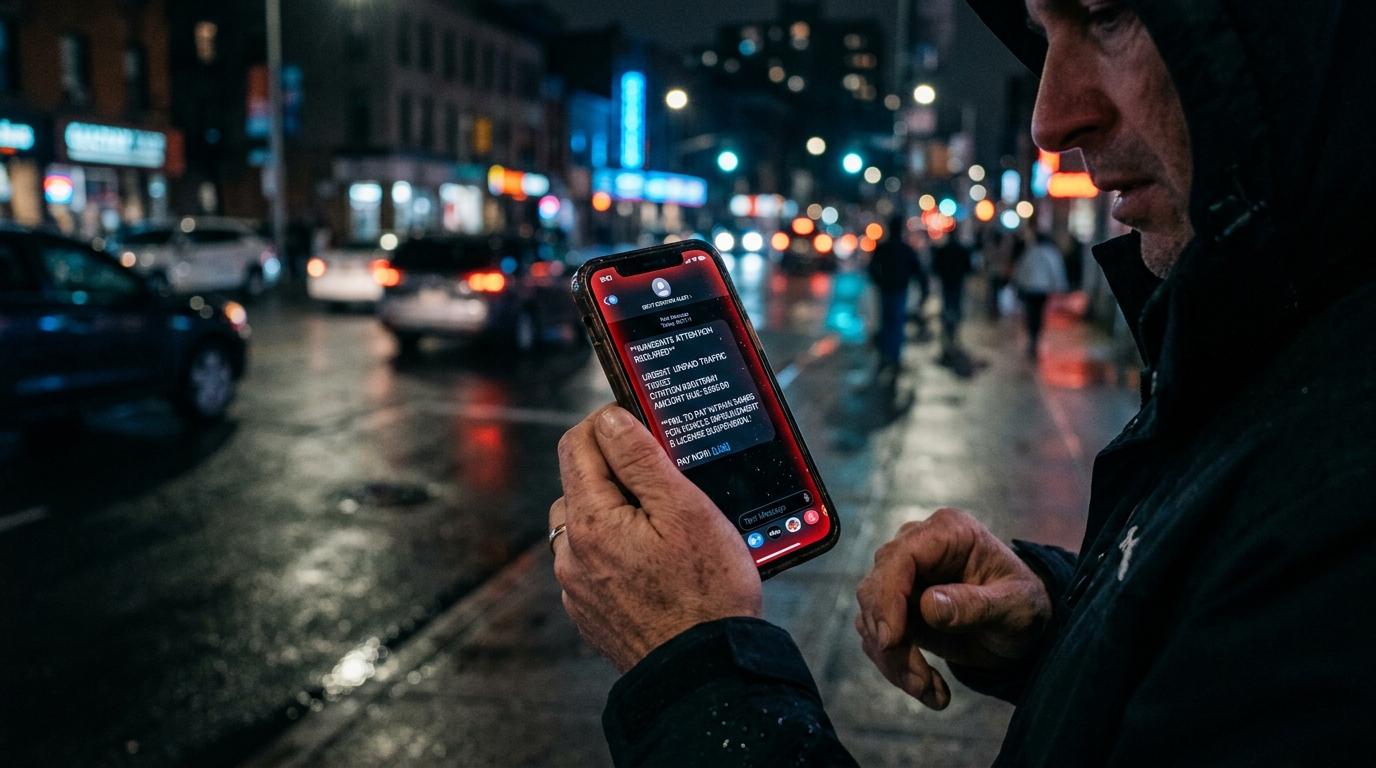
Text messages are another growing problem. You might receive an SMS claiming your benefits need updating or asking you to confirm your information by clicking a link. Delete these immediately. Learn how to identify these spam attempts and block them.
Fake Letters That Look Official
Scammers also send physical mail designed to look like it’s from Social Security. These letters might include:
- Fake employee badges or credentials
- Official-looking logos and formatting
- Urgent language about benefit suspensions
- Requests to call a specific number
- Forms asking for personal information
The Social Security Administration warns that reproducing federal employee credentials and badges is illegal. Real federal employees will never send photos of credentials demanding payment.
If you receive a letter that seems suspicious, don’t call any numbers listed on it. Instead, contact Social Security directly using their official phone number or visit a local office.
The Artificial Intelligence Factor
In 2025, scammers are using AI to make their schemes more convincing. Voice cloning technology can make a call sound exactly like a real Social Security employee or even someone you know.
The Senate Special Committee on Aging has identified AI as an emerging threat in fraud schemes. Scammers can now create fake voices, realistic-looking documents, and convincing emails faster than ever.
This makes it even more critical to verify everything. Don’t trust caller ID. Don’t trust that an email looks official. Go directly to the source using contact information you find yourself, not what’s provided in a suspicious message.
How Social Catfish Protects You
When you’re dealing with potential social security scam attempts, you need reliable information fast. That’s where Social Catfish comes in.
Social Catfish specializes in uncovering the truth behind suspicious contacts. Our tools help you:
- Verify phone numbers to see if they’re linked to scam operations
- Search email addresses to identify fraudulent senders
- Find information about suspicious callers through comprehensive background checks
- Uncover fake profiles and imposter accounts across platforms
Unlike free searches that give you limited information, Social Catfish provides comprehensive reports that can help you identify threats before you become a victim. You can run a reverse email search to check suspicious senders or use reverse phone lookup to verify unknown callers.
Many victims of social security scam attempts wish they had verified the contact information before engaging. Social Catfish makes this easy. Our platform searches public records, social media, and other databases to give you answers in minutes.
Protecting Yourself: What Actually Works
Stay calm. Scammers rely on panic to make you act without thinking.
Remember these rules:
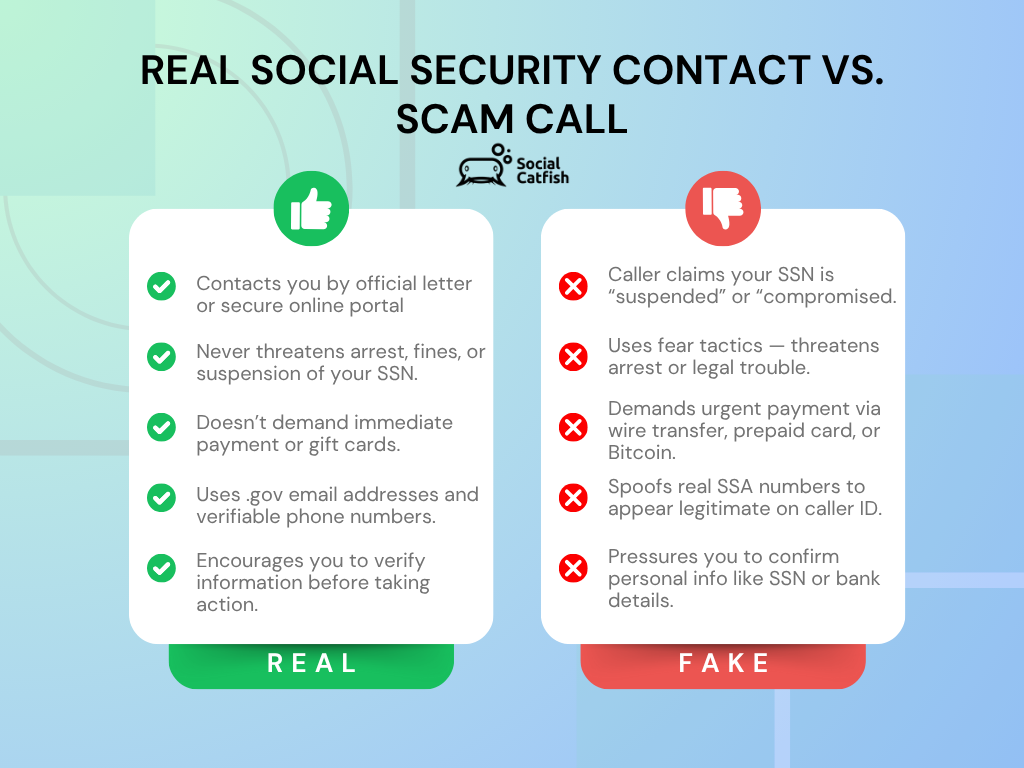
- Social Security will never threaten arrest or legal action
- They won’t ask for payment via gift cards, cryptocurrency, or wire transfers
- They won’t suspend your Social Security number (that’s not even possible)
- They won’t demand immediate action or secrecy
- They won’t email you links to download or verify information
If something feels wrong, it probably is. Trust that instinct.
Create a My Social Security account at ssa.gov if you haven’t already. This helps you monitor your records and makes you less vulnerable to scams claiming there’s a problem with your account.
Consider adding protective blocks to your account:
- eServices block prevents anyone from accessing your information online
- Direct Deposit Fraud Prevention block stops unauthorized banking changes
These blocks mean you’ll need to visit a local office to make changes, but the security trade-off is worth it for many people.
What to Do If You’ve Been Scammed
If you fell for a social security scam, don’t blame yourself. These criminals are professionals.
Take action immediately:
- Stop all contact with the scammer
- Report it to the SSA Office of Inspector General
- File a complaint with the FTC
- Contact your bank or credit card company
- Place fraud alerts with Equifax, Experian, and TransUnion
- File a police report
If someone used your Social Security number fraudulently, visit IdentityTheft.gov for a recovery plan. You may need to request a replacement Social Security card or even a new number in extreme cases.
The faster you act, the better your chances of limiting the damage.
Stay Informed and Stay Safe
Social security scam tactics will continue evolving. Scammers continually test new approaches, seeking out what works. Your best defense is staying informed about the latest schemes and sharing that knowledge with family and friends.
Follow the SSA Office of Inspector General on social media for real-time scam alerts. They post updates whenever new tactics emerge. Subscribe to their email alerts to get warnings sent directly to you.
Discuss these scams with older family members. People over 60 are often targeted because scammers assume they have retirement savings and may be less familiar with current fraud tactics. But anyone can be a victim.
Social Catfish offers additional resources to help you identify scams and protect yourself online. From spotting fake profiles to running background checks on suspicious contacts, we give you tools that work.
The bottom line? If someone contacts you claiming to be from Social Security and asks for money or personal information, it’s almost certainly a scam. Hang up. Delete the email. Throw away the letter. Then, verify the situation through official channels.
You’ve worked too hard for your benefits to let scammers steal them.