 Multiple Faces Detected


 February 9th, 2026
You swipe right on what looks like the perfect match. Great photos, interesting bio, and they seem genuinely interested in getting to know you. But something feels off.
Trust that feeling. It might save you from becoming another statistic in the growing world of online dating scams.
Romance scams cost Americans over $1 billion in 2023, and dating apps like Hinge have become prime hunting grounds for scammers. While Hinge markets itself as “the app designed to be deleted,” the reality is that fake profiles and scammers are lurking on every platform.
The good news? Most fake Hinge profiles follow predictable patterns. Once you know what to look for, spotting red flags becomes second nature. And that’s exactly what we’re going to cover.
The Harsh Reality of Fake Hinge Profiles
Before we dive into specific red flags, let’s talk numbers. Research shows that up to 10% of dating profiles are completely fake. That means for every 10 people you see on Hinge, one might not even be real.
But it gets worse. According to a 2024 survey, 53% of male online dating users reported being victims of romance scams. Women aren’t immune either – they’re often targeted for different types of scams.
The stakes are real. Take Laura Kowal, an Illinois widow who lost $1.5 million to a romance scammer she met on Match.com. She was later found dead in the Mississippi River. While not all scams end tragically, they can devastate lives financially and emotionally.
Red Flag #1: Photos That Look Too Perfect
The first thing you notice on any Hinge profile is the photos. Scammers know this. They steal images from models, influencers, or stock photo sites to create irresistible profiles.
What to watch for:
- Professional-quality photos that look like they came from a modeling portfolio
- All photos appear to be from professional photoshoots
- Images that seem too polished or “stock photo-like”
- Only glamour shots with no casual, everyday pictures
Real example: A user reported matching with someone whose photos looked like they belonged in a magazine. When they reverse-searched the images, they found them on a modeling agency’s website.
Pro tip: Use Google’s reverse image search. Right-click on any photo and select “Search Google for image.” If the same photo appears on multiple websites or belongs to someone else entirely, you’ve found a fake.
Red Flag #2: Minimal or Generic Profile Information
Authentic Hinge profiles tell a story. They include specific details about hobbies, work, and personality. Fake profiles? Not so much.
Warning signs:
- Extremely brief bio with generic phrases like “love to travel” or “looking for someone special”
- No specific details about their job, interests, or location
- Answers to Hinge prompts that could apply to anyone
- Profile feels like it was written by someone who doesn’t actually live the life they’re describing
Real example: A profile might say “I work in business” instead of “I’m a marketing manager at a tech startup.” Vague job descriptions are common among scammers who can’t provide specific details.
Red Flag #3: They Want to Move Off Hinge Immediately
Legitimate users are usually happy to chat on Hinge for a while before moving to other platforms. Scammers? They want you off the app as quickly as possible.
Why scammers do this:
- Hinge has security filters that can detect suspicious behavior
- Moving to text or other apps makes it harder for you to report them
- They can send links and attachments more easily outside the app
What they’ll say:
- “I don’t check this app often, here’s my number”
- “Let’s move to WhatsApp/Telegram, it’s easier”
- “I’m about to delete this app, can we text instead?”
The reality: Most people who are genuinely interested in dating will be fine chatting on the app for at least a few days.
Red Flag #4: Love Bombing and Moving Too Fast
Love bombing is when someone showers you with excessive attention, affection, and promises of a future together – way too early in the relationship.
Signs of love bombing:
- Saying “I love you” within days or weeks
- Making plans for your future together before you’ve even met
- Constant messaging and demands for immediate responses
- Over-the-top compliments that feel generic
Real example: One victim reported matching with someone who declared their love after just a week of messaging and started talking about moving in together.
Remember: genuine connections develop naturally over time. If someone is pushing for intense emotional intimacy immediately, that’s a red flag.
Red Flag #5: Refusing Video Calls or In-Person Meetings
This is perhaps the biggest red flag of all. Scammers will go to great lengths to avoid video calls or meeting in person because they’re not who they claim to be.
Common excuses:
- “My camera is broken”
- “I’m traveling for work”
- “I’m deployed overseas” (military romance scam)
- “I’m too shy for video calls”
- “Let’s get to know each other better first”
The truth: In 2024, video calling is normal. Anyone genuinely interested in dating should be willing to hop on a quick video call after a few days of messaging.
If someone consistently avoids video calls for weeks, you’re likely dealing with a scammer. Social Catfish’s guide to fake video chats can help you spot even sophisticated video scams.
Red Flag #6: Inconsistent Stories and Details
Scammers often manage multiple fake profiles and can’t keep their stories straight. Pay attention to inconsistencies in what they tell you.
What to watch for:
- Details about their life that change over time
- Stories that don’t add up when you ask follow-up questions
- Claiming to be local but not knowing basic things about the area
- Photos that seem to be from different time periods or locations
Pro tip: Ask specific questions about their claimed location, job, or interests. Scammers often give vague answers or change the subject.
Red Flag #7: Financial Requests (The Ultimate Red Flag)
This is where romance scams reveal their true purpose. Once they’ve built trust, scammers will ask for money.
Common scenarios:
- Medical emergency for them or a family member
- Stuck overseas and need money for travel
- Investment opportunities that are “too good to pass up”
- Temporary financial hardship with promises to pay you back
The golden rule: Never send money, gift cards, or financial information to someone you’ve only met online. Period.
Romance scam victims lost over $1.18 billion in 2023. Don’t become part of that statistic.
Red Flag #8: The “Just Joined” Badge Combined with Other Warning Signs
Research on Hinge scams points out that while legitimate users can have “Just joined” badges, scammers frequently rely on this because they’re constantly creating new accounts.
A “Just joined” badge isn’t a red flag by itself, but combined with other warning signs, it becomes more suspicious.
How to Verify a Hinge Profile
Before you get too invested, here are ways to verify someone’s authenticity:
1. Reverse image search their photos
Use Google Images or TinEye to check if their photos appear elsewhere online.
2. Look them up on social media
Most people have some social media presence. If they claim to have Instagram but won’t share it, that’s suspicious.
3. Ask for a video call early
Don’t wait weeks. If they’re real, they’ll be happy to video chat.
4. Check their phone number
If they give you a number, you can use Social Catfish’s reverse phone lookup to see if it’s associated with their claimed identity.
5. Trust your instincts
If something feels off, it probably is. Don’t ignore red flags because you want the connection to be real.
What Hinge Is Doing About Fake Profiles
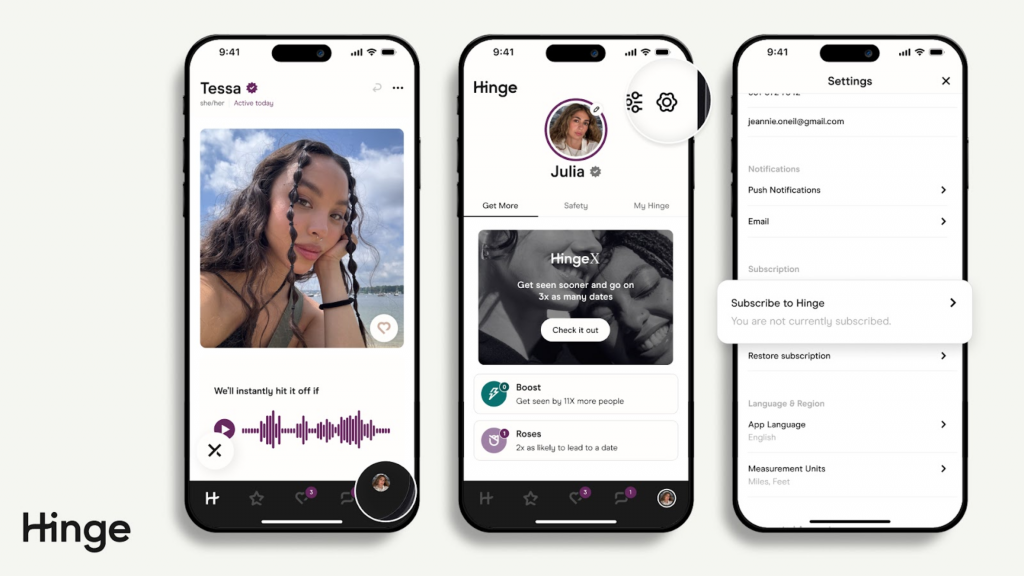
To be fair, Hinge isn’t sitting idle. The app has implemented several security measures:
- Photo verification through video selfies
- AI algorithms to detect suspicious behavior
- Human moderators reviewing reported profiles
- Encryption to protect user data
But as security experts note, no system is perfect. Scammers are constantly evolving their tactics.
When Social Catfish Becomes Your Best Friend
If you suspect you’re dealing with a fake profile, Social Catfish is your go-to resource. Their comprehensive background check services can help you verify someone’s identity before you get too emotionally invested.
Social Catfish offers:
- Reverse image searches to check if photos are stolen
- Phone number lookups to verify contact information
- Social media searches to find someone’s real online presence
- Dating profile searches to see if they’re on multiple platforms
Unlike other services that only scratch the surface, Social Catfish digs deep to give you the complete picture. When your heart and your wallet are on the line, it’s worth the investment.
Protecting Yourself Beyond Red Flags
Spotting red flags is just the first step. Here’s how to stay safe while dating on Hinge:
Before meeting:
- Keep conversations on the app initially
- Video chat before meeting in person
- Don’t share personal information like your address or workplace
- Learn how to tell if someone is on other dating sites
When meeting:
- Always meet in public places
- Tell a friend where you’re going and who you’re meeting
- Drive yourself or use your own transportation
- Trust your instincts – if something feels wrong, leave
### What to Do If You’ve Been Scammed
If you realize you’ve been talking to a scammer:
- Stop all communication immediately
- Don’t send any more money or information
- Report the profile to Hinge
- Contact your bank if you’ve sent money
- Report the scam to the FTC at ReportFraud.ftc.gov
- Consider using Social Catfish’s scam verification services to understand what happened
Remember: being scammed doesn’t make you stupid or naive. These criminals are sophisticated and prey on people’s desire for connection.
Your Safety Net in Online Dating
Dating apps like Hinge can lead to genuine connections and lasting relationships. But they require vigilance and smart safety practices.
The red flags we’ve covered – perfect photos, minimal profiles, rushing to move off-app, love bombing, avoiding video calls, inconsistent stories, financial requests, and suspicious “new” accounts – are your early warning system.
When in doubt, verify. Social Catfish’s search tools can help you separate the real from the fake before you invest your time, emotions, or money.
Your perfect match is out there. But they’ll be happy to video chat, won’t ask for money, and their photos will actually be of them. Don’t settle for anything less.
Stay safe, trust your instincts, and remember: if it seems too good to be true, it probably is. But with the right knowledge and tools, you can navigate Hinge safely and find the genuine connection you’re looking for.