
 Multiple Faces Detected



 December 10th, 2020
You do your best to keep yourself and your family safe.
You lock the doors of your home and have an alarm on your car. You educate yourself and your family about internet safety and what details to share or keep private.
Unfortunately, when it comes to identity theft, these actions alone will not protect you. Today’s criminals can steal from anyone, including you.
- What is Identity Theft?
- Who is Being Targeted?
- Identity Theft Statistics
- Credit Card Identity Theft
- Social Security Identity Theft
- Tax Identity Theft
- What To Do If You’ve Been a Victim of Identity Theft
- How Can Social Catfish Help with Identity Theft?
Once their crimes are discovered, most victims don’t even know how it happened or what information was taken. Most of the people who fall victim to a cyber criminal’s terror never expected it to happen to them.
This is true even if you password protect all of your accounts, banking information, and your home network. Every time you open your email, visit a website and use or apply for a new credit card, there is a risk that your private information could be compromised and fraudulent accounts taken out in your name.
At a minimum, identity theft can cause your credit score to decrease. At a maximum, it could become a chronic problem which jeopardizes your ability to rent or buy a home, get hired for a new job, or even land you in jail for crimes you didn’t commit.
Let’s find out how you can use the most advanced tools and information to protect yourself and your loved ones. We will also learn how to discover if you’ve been a victim and take action to keep your information secure.
What is Identity Theft?

Dictionary.com defines identity theft as “the fraudulent appropriation and use of someone’s identifying or personal data or documents, as a credit card.” While this definition describes the basics of identity theft, the reality is more complicated. Identity theft can manifest in more than one way – from your credit cards to your bank information or social media accounts being compromised.
Commonly, it goes unnoticed until a criminal uses your information and obtains credit and benefits. This is a form of fraud and, while the criminal benefits financially, the victim is often left with long term ramifications such as a ruined credit score and an inability to buy a car or find a place to live!
The data typically stolen includes name, birth date, address, social security number, medical information, online images, credit card numbers, bank information, and financial data. If you lose your wallet, an identity theft criminal might even pretend to be you by using your driver’s license or sell it to someone on the dark web.
Once a criminal has your license and social security number, they can open up vendor accounts online and rip off others. Since a thief’s goal is money, they will use as many of your accounts and credit cards as possible.
While many criminals target credit cards, social security benefits, and tax information, others will operate more like catfisher and pretend to be you on social media accounts. Identity thieves steal from others for a living and stay savvy to the changing risks of getting caught.
Due to this, they may switch methods frequently. As passwords become more complex and two-factor authentication becomes the standard, many scammers have moved to set up fake phone numbers and incorporating bots or A.I. fueled authentication answers to hack your accounts.
The next time you receive an unexpected phone call from your bank, know that it could be someone using a spoofed phone number. Once you give a scammer your financial data or credit card details, they won’t stop until there is nothing left to spend.
Who is Being Targeted?

Adults aren’t the only ones being targeted with identity theft, seniors and children are also being targeted as scammers steal their information to apply for credit cards, financing plans, etc. Even though everyone is at risk for identity theft, there are still certain groups of people that are targeted the most when it comes to getting their information stolen.
According to HuffPost, child identity theft is increasing, with 150,000 children being affected per year. These kids’ information is then used to apply for credit cards and loans while going undetected for years, since parents don’t think to check their child’s credit score since they know they aren’t buying anything yet. Since parents usually don’t keep an eye on their child’s credit scores, scammers target children knowing they can get away with it for years.
Along with this, if you have a weak password, make over $75,000 a year, or are between the ages of 18-24 years old, you’re also at a higher risk of being targeted for identity theft.
18-24 year olds are targeted because most of the time they don’t know how to protect their information when applying to credit cards and loans for the first time, so scammers are more able to steal their information. With a weak password, its easier for scammers to access your accounts to steal your information.
If you make over $75,000 a year, they want to steal your information more-so since credit scores are higher and they can get approved for more. You’re also more likely to have more accounts open, which is more accounts that hackers can get into to obtain sensitive information.
Identity Theft Statistics

According to the graph below, the Los Angeles-Long Beach-Anaheim CA area has the most amount of identity theft cases at 54,553 people who have been victims. Following this metropolitan area, we have New York-Newark-Jersey City NY-NJ-PA with 46,030 victims, Miami-Fort Lauderdale-West Palm Beach FL with 34,458 victims, Atlanta-Sandy Springs-Roswell GA with 33,940 victims, and Dallas-Fort Worth-Arlington TX at 27,637 victims.
The metropolitan areas with the least amount of victims are Alexandria, LA at 385 victims, East Stroudsburg, PA at 347 victims, Sumter, SC at 342 victims, Rocky Mount, NC at 300 victims, and Sebring, FL at 219 victims.
The statistics on identity theft leave little doubt in the minds of experts that this is an ongoing, worldwide problem. Even as steps are being taken to combat fraudulent identity crimes, the data shows the loss in the millions of dollars yearly (16.7 million). According to a report by Javelin Strategy & Research, the number of identity fraud victims in 2018 increased by 8%.
There are now 16.7 million U.S. consumers scammed yearly and the most significant risk of all? Online shopping! Instead of a criminal needing your actual credit card in their hand, cyberthieves only need numbers for your financial data!
In 2018, there was a 200% increase in cybercriminals who used this method. This means that a criminal could open up a new cell phone account, take out a payday loan, or create a fake online merchant account that you won’t know about until it blemishes your credit rating.
According to the Identity Theft Resource Center (ITRC), since 2005, there have been 1.6 billion records exposed. That includes 16.7 million identity theft victims to date and 1 million+ minor (childhood) victims.
According to the Identity Theft Resource Center’s 2018 report, industry breaches were down 23%, but Consumer PII records were exposed 126% more often than in 2017. This means that your data was and is still at grave risk. Furthermore, children being the victims of identity theft often happens in the form of their social security information being stolen.
Why would a thief steal a child’s data? Because parents aren’t likely to review their children’s credit score and the stolen SSN can be used indiscriminately!
Out of 1.1 million fraud reports in 2017, there was a $905 million total fraud loss. Click to Tweet
Also according to the ITRC (Identity Theft Resource Center), the business sector had the highest number of breaches but the lowest rate of exposure per breach in 2018. Meanwhile, the healthcare sector had the second largest amount of breaches, with the most exposure per breach.
Over one year in 2017, the Federal Trade Commission’s online database (for consumer complaints), has identity theft in second place – beat only by debt collection scams.
If a cybercriminal takes the time to acquire your information, they must make quite a profit from your data, right? If you are wondering how much this type of fraud will cost you, even if you discover the crime and report it in time the answer is that, generally, each victim pays about $290.00 out of pocket and spends an average of 16 hours trying to remedy the situation.
The excellent news is Federal regulations state that banks must reimburse customers when funds are withdrawn without their approval. If a customer notifies their bank that funds have been taken out fraudulently, the bank should refund the money within 10 (business) days. This is considered a provisional credit which lasts between 45 and 90 days. During that time frame, the bank conducts its investigation into the funds to see if they were misappropriated.
Top 10 States by Number of Identity Theft Victims in 2017
Each state is ranked based on the number of complaints they have per 100,000 people (or percentage of population).
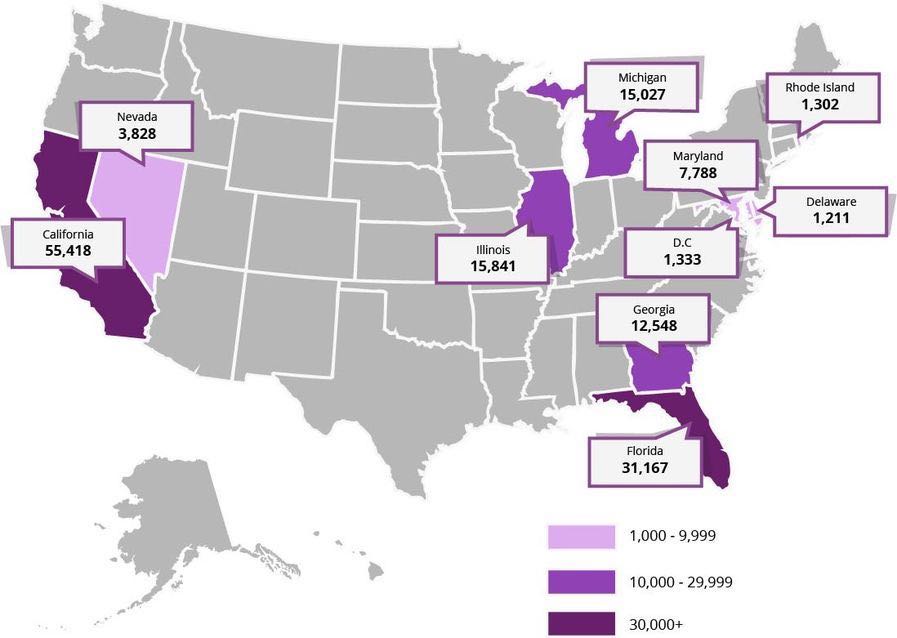
Source: Insurance Information Institute
The three common types of identity theft which we will focus on are credit card, social security number, and taxes:
Credit Card Identity Theft
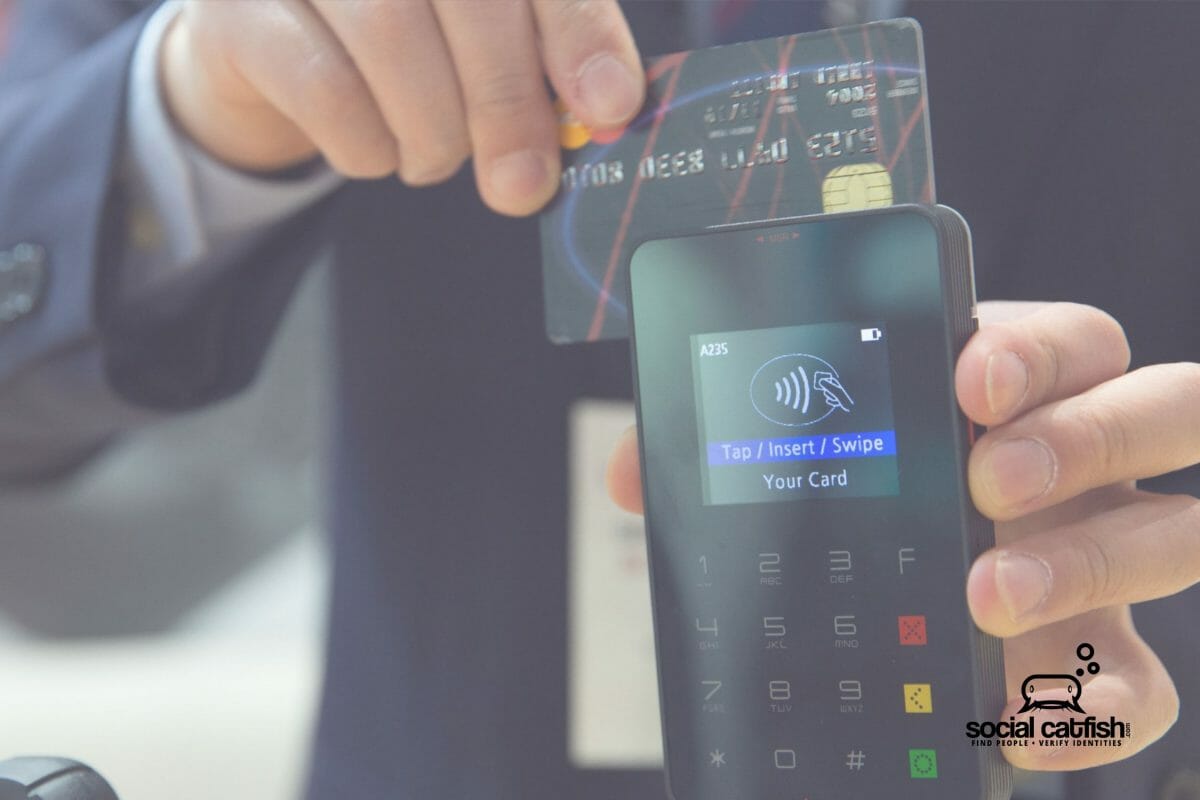
Credit card identity theft is when a scammer has stolen your credit card or the details for your credit accounts, and they use it to shop! In past years, a stolen credit card usually happened if you lost your wallet.
Nowadays, all someone has to do is skim the numbers off your credit card. This type of theft can even be done with a digital machine, called a skimmer, while you’re at a gas station.
Moreover, each time you hand an employee your card at a restaurant, they could be writing down or photographing your information and selling or sharing it. Other times, credit card information is stolen directly from your computer when your accounts are hacked or when you (mistakenly) enter your credit card details onto a phished/fake website or browser.
Unfortunately, the moment victims become educated about one type of credit card scam, scammers find another. These are some of the warning signs of credit card identity theft:
Credit Card Identity Theft Statistics
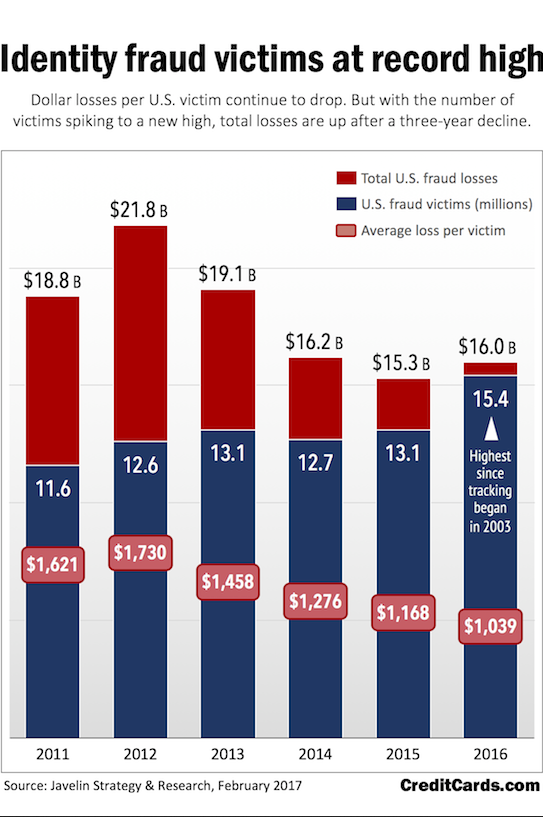
- In 2017, identity theft in the form of credit card fraud went up 23%.
- Also in 2017, credit card identity fraud was 16.8% of total identity theft fraud.
Warning Signs of Credit Card Identity Theft
Many times, victims of identity theft continue in their lives, unaware that a crime has happened or that their information has been victimized. Unfortunately, the longer it takes to identify credit card identity theft, the worse the damage will be! Our goal at Social Catfish is to educate consumers so these instances of fraud can be contained quickly and further financial repercussions stopped in their tracks by paying attention to the warning signs; you’ll know when to take action and how.
One important red flag about identity theft happens when you apply for a new credit card. You know that your credit score is good or average, but your application is rejected. You know that that you’ve always had a decent credit score and pay your bills on time.
Unfortunately, many consumers fail to take action when this happens and assume it was an error on their part when filling out the application. Another instance is when you receive a phone call from someone about an overdue credit card bill. You’re surprised, as you thought you made a payment and paid before the due date. Or, maybe someone who claims to be from your credit card company calls you.
They want to verify your credit card information before sending you a card with a chip. However, if your (legitimate) credit card company intended on sending you a new card with a chip, they would ship the card directly to your account address. If you are regularly reviewing your credit card statements and report (as you should be), you may notice incorrect accounts due on your credit report or unknown charges on your credit card bill or bank statement.
Another warning sign which consumers often ignore the risk of is unsolicited emails. These emails are part of a scamming technique called phishing. They occur when a scammer sends you an email that appears to be from legitimate companies. The goal of these fake emails is to get you to click on fraudulent links.
You won’t realize you’re being scammed, often, as the messages mimic the font and icons of real emails. The links will ask you to verify personal financial details (SSN, credit card numbers, bank accounts) and then steal them or direct you to malware that will download spyware on your computer or smart device.
If you do visit a website that a phishing email led you to, it will also seem official. To verify the legitimacy, check the web domain address. Fake websites that mimic legitimate sites are called “spoofing”. Also, your bank and credit card issuer will NOT ask you to verify, authenticate, or update information over email. If someone asks you to confirm the information by phone, ask to call them back and double-check the number they gave you was accurate, via your phone book or a well researched online search.
Ways to Prevent Credit Card Identity Theft
Knowing the warning signs of preventing credit card identity theft may be the first step, but complete security is action-oriented. This means that you should regularly check your credit score via free online credit reporting.
To keep your accounts secure, it is imperative to turn on 2-factor authentication for each of your email accounts, cell phone, and financial reports (whenever possible). Secure your accounts with additional security questions and use different passwords on email and financial statements versus social media or personal accounts.
When you throw out your ATM receipts, credit offers, or credit card/bank statements, make sure all the details are shredded. If you don’t own a shredder, use a sharpie and scissors or invest in a shredder (it’s cheaper and less time consuming than repairing your accounts after identity theft).
Savvy consumers make an effort to review their banking and credit card statements monthly and contact financial institutions about any errors. Some, even compare their credit and bank charges with paper receipts.
While doing all this, pay attention to billing cycles for your various credit cards and accounts. Be suspicious of calls or emails asking for payment at other times.
One undervalued tool which requires little work is to use your common sense. Be suspicious of phone calls or emails that request information. Even if the caller sounds pleading, authentic or convincing, don’t let a scammer bully you into giving out information that doesn’t feel right – set boundaries.
An important boundary is to not provide anyone with your credit card or financial information over the telephone or by email. The exception is when you placed the call and are sure that you connected with a business or enterprise, at the correct number, and one which uses safety measures for your information (for example, your credit card number when you are paying an overdue gas bill).
Also, when using financial accounts, turn on “Transaction Alerts” and “Account Alerts”. These alerts may be sent to you by app, text, or email, each time a purchase is made!
Keep a written list of customer service numbers for your credit cards, in case they are lost (ex., you lose your wallet) and immediately report any (suspected or confirmed) unauthorized transactions. In terms of computer safety, you can install firewalls/virus detection software on your computer. Avoid public unsecured WiFi or other people’s hot-spots.
For safety with printed information, in addition to shredding private documents, you can do your part to end identity theft by writing, “return to sender, not at this address” on any bank or credit offers sent to someone who doesn’t reside at your address.
Lastly, be careful who you trust. Sadly, family members sometimes steal information. For example, your spouse may have a gambling problem or your grandchildren may assume that you won’t notice they opened an extra credit card in your name. While we should be able to trust our family members, be diligent in keeping your information secure even at home!
Social Security Identity Theft

This type of identity theft is when someone gets a hold of your social security number and uses it to open accounts, credit cards, or acquire the money that belongs to you. Your social security card is an incredibly important government-issued card, since it is used when you apply for credit cards, for taxes, and more.
Sometimes, a social security number is stolen and only used to gain employment. A cybercriminal may get your SSN from a breach of a larger company, when someone intercepts your mail at a former address, or when you lose your social security card. You may also have provided a copy of your social security card to your doctor’s office staff, at a new job, etc. and a worker there might have stolen it!
Social Security Identity Theft Statistics
- Children are the newest and most rapidly rising victims of social security identity theft. Per the Identity Theft Resource Center, 1.3 million children’s records are stolen every year.
- The standard method scammers use to get your social security information is to call you and say that your card has been suspended. The SSA will never suspend your SSN or call and ask you to verify your social security number.
Warning Signs of Social Security Identity Theft
Know what to look for to protect your social security information! Failure to do so can lead to a denial of benefits when you need them most. Unless you are anticipating a call from the Social Security Administration at a specific time, beware.
Also, assume that any calls saying that your card is being suspended or reissued (and that you need to verify your SSN) are fake. Even if the caller sound official, asking for your SSN is a huge red flag.
One reason for you to call the Social Security Administration directly if you’re concerned about a prior SSA call is that scammers and cybercriminals often use spoofed fake numbers. These numbers will appear to be from a real company or government body but aren’t.
Another concern is if you lose your wallet containing your social security card. Whoever finds your card could use or sell it. Unfortunately, if you apply for benefits legitimately, and are denied someone may have already (fraudulently) applied for social security benefits using your stolen information.
Take notice when your credit report shows accounts you never created. Or, if you search for your name online and find duplicate accounts showing your same name and city, someone may be impersonating you.
While the worst sign of social security identity occurs rarely, it is when the police show up at your door with an arrest warrant for social security fraud even though you never committed a crime.
Ways to Prevent Social Security Identity Theft
To prevent Social Security identity theft, the first step is to check your credit score with a free online credit report. If someone has gotten ahold of your SSN, they will likely try and open up credit cards in your name, which you will see listed. Similar to protecting against credit card identity theft, make sure that you turn on 2-factor authentication for all email, cell, and financial accounts (whenever possible).
Another crucial tool is common sense. Being suspicious of phone calls or emails requesting the information is wise. Don’t let a scammer bully you into giving out your social security number. Do not provide anyone with your social security or financial information over the telephone or by email.
If a business lets you verify your account with the last 4 of your SSN, create a PIN # for verification instead. Secure your bank, credit, and email accounts with additional security questions. Use different passwords for credit and bank logins, versus email and social media accounts.
Avoid carrying your social security card in your wallet, where it could be lost. Place it in a safety deposit box or safe inside your home. Only take it with you if it is mandatory.
Avoid taking photographs or texting the number to anyone (even family). Review your banking and credit card statements monthly and contact the financial establishment about any errors. Compare your charges with receipts. Pay attention to any Social Security Administration benefit details or letters sent from the SSA.
In the case of suspected social security fraud, don’t wait a month or more to handle the situation. Take action immediately. Keep your online and social media accounts private, so scammers can’t collect information about you.
Block suspected fake accounts and users as they may be cybercriminals trying to get information about you. If you do notice any changes to your credit report or inaccurate charges, contact all credit and financial institutions even if you don’t see false charges on each account.
Tax Identity Theft

Tax identity theft is when someone steals your social security number and then files taxes with your information. They do this so they can secure your refund fraudulently. They may also apply for benefits under your name or use your SSN to apply for credit cards.
A cybercriminal may get your SSN from a breach of a larger company, when someone intercepts your mail at a former address or when you lose your social security card. You may also have provided a copy of your Social Security card to your doctor’s office staff, at a new job, etc. and a worker there might have stolen it!
Tax Identity Theft Statistics
- In 2017, identity theft in the form of tax fraud was down 46%.
- However, also in 2017, tax fraud identity theft was still 7.5% of total identity theft fraud.
Warning Signs of Tax Identity Theft
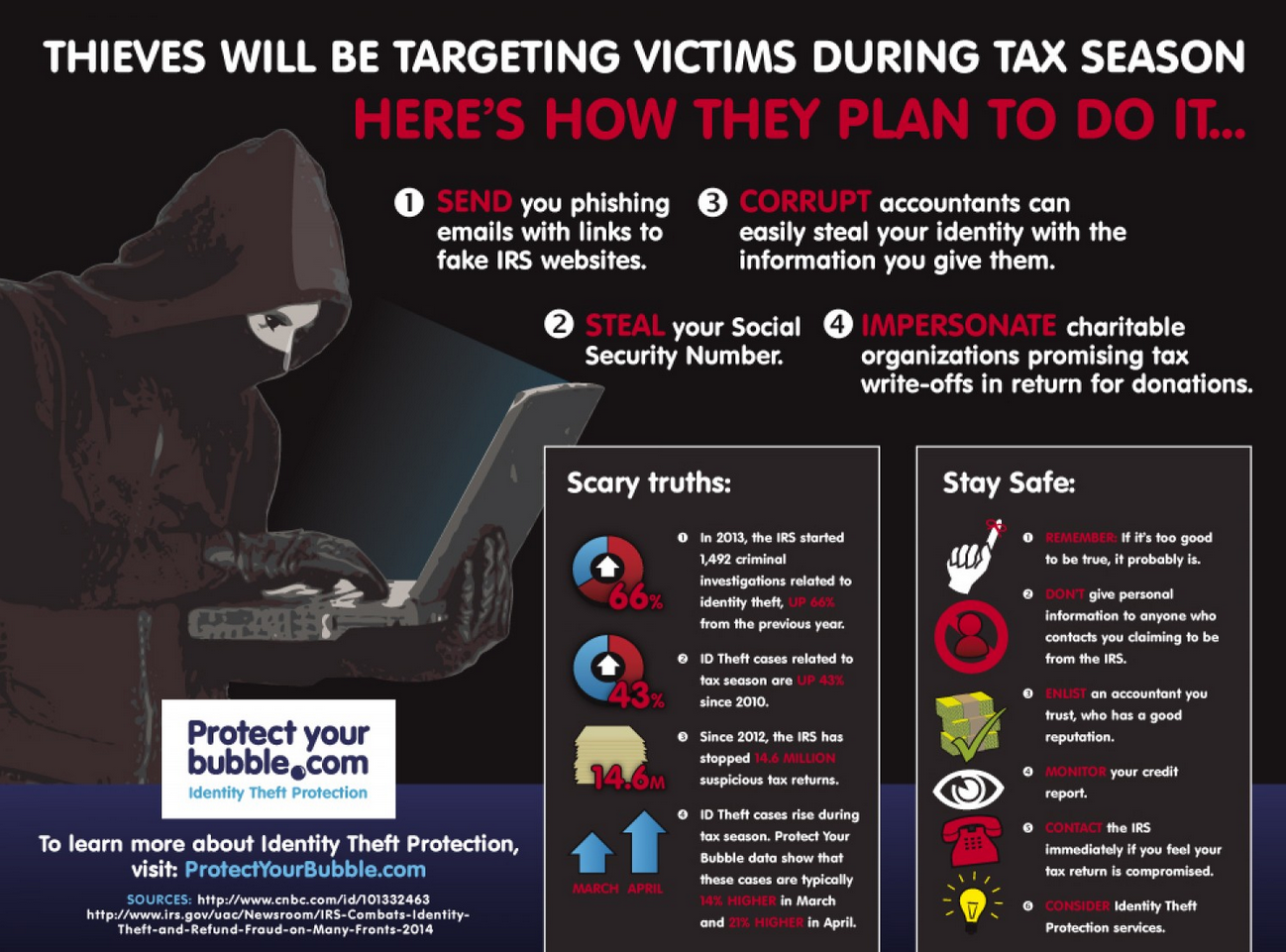
Tax identity theft doesn’t just happen. There are warning signs which you can pay attention to before your credit score suddenly goes down or you receive alerts about unpaid bills or a tax debt you have never heard of before. The first warning sign may be that you don’t receive your tax refund or the IRS sends you a letter that more than one tax return was filed.
Worse, the IRS may tell you that you owe additional taxes or a refund offset, or that you didn’t file a previous year’s taxes correctly or filed an amended return as tax identity theft can expose all of your information (SSN, address, birth date, name, the dependent’s SSN’s).
Ways to Prevent Tax Identity Theft
You can take essential steps to protect yourself against tax identity theft. The first is to keep your digital tax return on a secure password protected the computer. Second, remember that you do not need to carry your social security card in your wallet. It should be kept in a secure location, safe, or safety deposit box as should print copies of your tax returns.
You can prevent possible access to your taxes, by filing online, instead of by postal mail. When you do submit online, use secure WiFi (not public!) on your home computer, which should have additional features such as security software and a firewall!
If you receive any IRS notices, respond quickly and shred all financial data or store the data you keep securely. Collect mail every day and keep your mailing address current (update it when you move).
Don’t share personal information just because someone asks for it, even if they sound convincing (or even threatening) via phone or email. No one should ask for your banking information or social security number through either method. If a business insists (some companies verify accounts with the last four digits of your SSN), ask to create a PIN # for verification or to use another method.
What To Do If You’ve Been a Victim of Identity Theft

- Report the identity theft to your bank or credit card company. This will allow them to reverse any charges that aren’t yours. Plus, for most credit cards you have two days to report it and the maximum liability is $50. If you report it again after money is taken out between 2-60 days, it increases to $500. If you’re still having issues and report it after 60 days, you get unlimited liability.
- Put an identity theft alert on your credit report. Identity theft can bring credit scores down a significant amount. By putting an alert on your credit report, it’ll make it harder for scammers to open up an account under your name to where businesses need to call you if you want to open up a new account. This alert lasts for a year, but you can continue to place an alert on your account every year.
- Place a freeze on your credit. This will prevent credit reporting agencies from releasing your credit report to credit companies. When placing a freeze, you will be given a pin or password that you will need to remember to be able to lift the freeze. Do not give this pin or password to anyone.
- Report your identity theft to the FTC. They will then provide you with a recovery plan and an identity theft report as proof that you were indeed a victim to identity fraud.
- Report your identity theft to the police. If you give them the exact location in which you suspect your identity was stolen, they could then open up a case to pinpoint who actually stole your identity. The more information you provide to the police, the more of a chance they’ll be able to have to find the suspect who stole your identity.
- Change all of your passwords. This will prevent the scammer from accessing your other accounts, and also prevent the affected accounts from obtaining more fraud.
- Replace any identification cards with stolen information. You can request another social security card online, and another driver’s license at your DMV. You can also flag your driver’s license number if someone else is using it.
How Can Social Catfish Help with Identity Theft?
[aesop_video src=”youtube” id=”drI3SfmR-ls” width=”100%” align=”center” disable_for_mobile=”off” loop=”off” controls=”off” autoplay=”off” mute=”off” viewstart=”off” viewend=”off” revealfx=”off” overlay_revealfx=”off”]If you’re not sure where to begin, a Social Catfish search is the best first step. This is because the search site, Social Catfish, uses proprietary tools not found when you only search on Google or Bing. Through our algorithm-based search, you will be provided with a list of social media and public accounts that match your name, phone number, email address, username, and image or photo.
An identity which sites are leaking your private information to potential hackers and online criminals. You can delete then those accounts or make them private. Best of all, Social Catfish will regularly update the server with each new match for your privacy search.
Cybercriminals may always exist, but be one of the lucky ones! Follow the safety tips in our guide and search all of the major search engines today at Social Catfish.