 Multiple Faces Detected


 April 23rd, 2026
Swiping through Tinder can feel exciting, with new faces, interesting bios, and potential connections. But here’s the sobering truth: romance scams cost Americans $1.14 billion in 2023, with a median loss of $2,000 per person, the highest reported losses for any form of imposter scam, according to the Federal Trade Commission.
That attractive person who seems almost too good to be true? They might be using stolen photos to create a fake persona. Catfishers and scammers bank on emotional connection to manipulate victims, often building relationships over weeks or months before asking for money.
Before you get invested in someone’s story or worse, send money to help with their “emergency,” there’s a simple solution to verify one’s identity. Tools like Social Catfish’s reverse image search take less than a minute and can reveal whether those profile pictures belong to the person you’re chatting with or were lifted from someone else’s Instagram, a modeling website, or another dating profile across the internet.
What Is a Reverse Image Search on Tinder?

The Basics: Searching with Images, Not Words
A reverse image search is exactly what it sounds like. Instead of typing words into a search engine, you upload a photo, and a reverse image search for dating sites tool will scan through billions of records and all major dating sites to reveal websites where the exact image and similar images appear online.
How It Works on Tinder
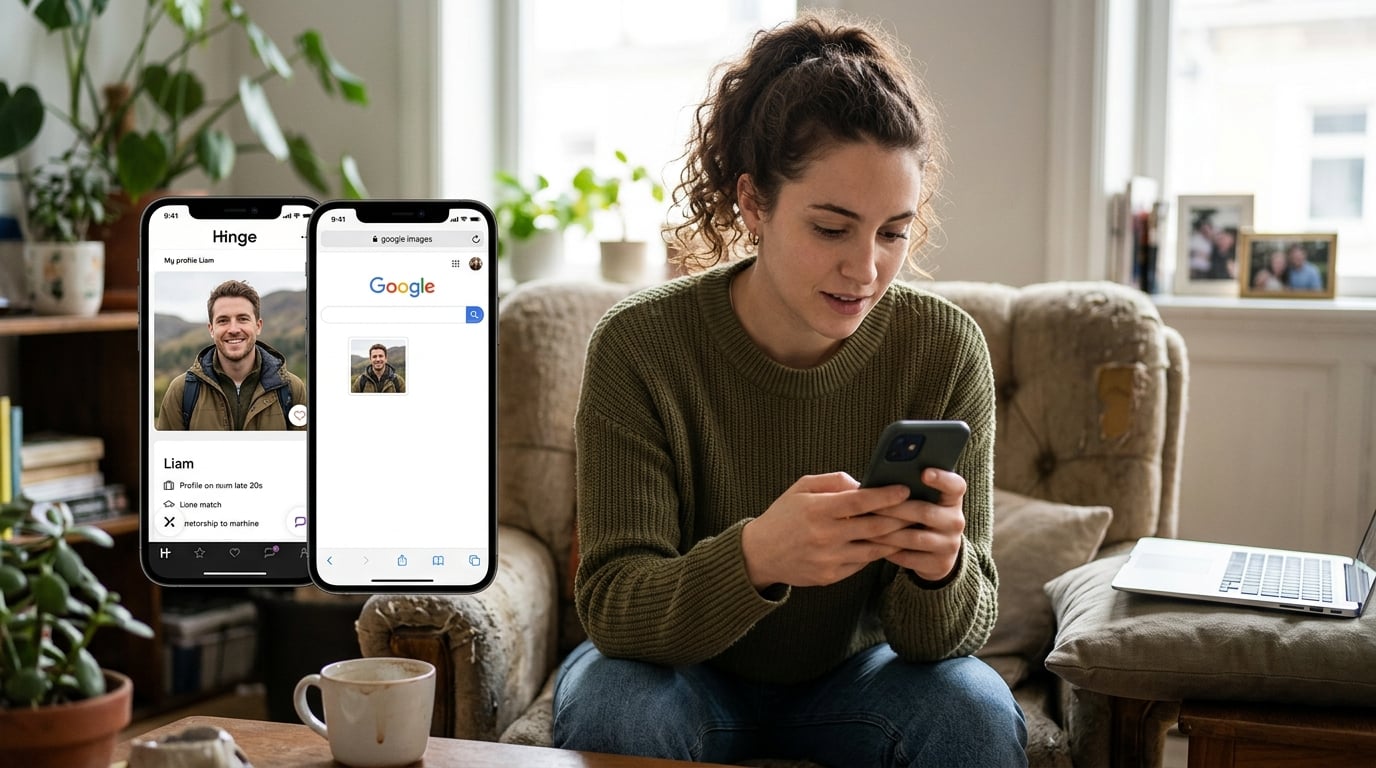
When it comes to Tinder, this means taking a screenshot of someone’s profile picture and running a reverse image search Tinder check using a tool like Social Catfish. Within seconds, you can see if that same photo shows up on other dating profiles under different names, across social media accounts, in stock photo libraries, or even on modeling portfolios.
What the Results Tell You
Think of a reverse image search, Tinder profile check as a digital background check for profile pictures. If someone is genuinely using their own photos, the search might turn up their social media accounts—profiles that match the name and story they’ve told you. But if you discover the images belong to a model in Brazil, a soldier stationed overseas (a common scam tactic), or multiple dating profiles with different identities, you’ve just saved yourself from a potential catfish.
Why It’s Worth Your Time
The beauty of reverse image search Tinder free checks is their simplicity and accuracy. You don’t need special software or technical skills. Our proprietary facial recognition technology can then confirm if that same person has other hidden profiles, even under different names. It’s the only way to be 100% sure you’re investigating the right person.
How Reverse Image Search Protects You on Tinder
Why It Matters for Your Safety
Tinder reverse image search is often underutilized by online daters, yet it’s one of the most powerful tools for unveiling profile authenticity. By using Social Catfish’s reverse image search, you can verify if the images presented by a potential match are genuine or stolen from elsewhere on the internet. This becomes particularly valuable in the age of AI and catfishing, where individuals can easily create compelling fake identities to deceive others.
What You Can Uncover
Beyond protecting yourself from catfishing, reverse image search can help you discover additional profiles associated with the same images. You might find the same person under different names or uncover signs they’re active on multiple platforms. Cross-referencing their images across social media and other dating sites gives you more context about their interests and lifestyle, fostering more meaningful and transparent conversations.
How to Get the Most Accurate Results
To maximize your search effectiveness, upload clear, high-quality images and critically evaluate your results. While reverse image search provides valuable leads, always cross-reference information from multiple sources. Corroborating results with additional tools like phone number lookups or username searches helps ensure the validity of your conclusions.
Red Flags to Look For in Tinder Profiles
Suspicious or Generic Names
Pay attention to names that seem off. Scammers often use common, generic names like “Chris Johnson” or “Jessica Smith” that are difficult to trace online. Be wary of profiles with unusual spellings, names that sound like they’re straight out of a romance novel, or single names without a last name. If someone claims to be American but has a name that doesn’t match their supposed background, that’s worth investigating. When something feels off about a name, run a name lookup to see if it connects to legitimate social media profiles and public records.
Missing or Inconsistent Social Media
Most genuine Tinder users have some sort of social media presence. If your match claims to barely use social media, has no Instagram linked to their profile, or refuses to connect on other platforms, proceed with caution. When they do share a username, search for it. If the account was created recently, has very few followers, limited posts, or the photos don’t match their Tinder profile, you’re likely dealing with a fake account. Authentic people have digital footprints; scammers try to avoid leaving them.
Too Perfect to Be True Matches
We all love a good connection, but be skeptical if someone seems too perfect. If they share all your interests, agree with everything you say, and shower you with excessive compliments right away, they might be manipulating you. A reverse image search for dating apps is a smart first step here, because scammers study profiles to mirror your preferences and create an illusion of compatibility. Genuine connections develop naturally over time, not through scripted perfection. Also watch for matches who quickly move the conversation off Tinder to text or messaging apps, often claiming the app “doesn’t work well” for them. This is a classic tactic to avoid detection by the platform’s safety features.
How Social Catfish Can Help
Reverse Image Search: Your First Line of Defense
Social Catfish’s Tinder reverse search reverse image search is your most powerful weapon against Tinder scammers and catfishers. Simply upload a screenshot of your match’s profile photo, and within seconds, you’ll discover if those images appear anywhere else online, whether on other dating profiles, social media accounts, or stock photo websites.
Go Deeper with Additional Search Tools
While reverse image search is essential, Social Catfish offers a complete suite of verification tools to help you investigate suspicious profiles from every angle:
- Name Search: Verify if the name your match gave you connects to legitimate social media profiles, public records, and online presence. Scammers often use fake or stolen identities, this search helps you confirm if the person exists.
- Username Search: Got a social media handle? Search it across multiple platforms to see if it’s connected to the person they claim to be or if it’s linked to suspicious activity.
- Phone Number Search: If your match has shared their phone number, verify it’s legitimate and see what information comes back. This can reveal their real identity, location, and whether the number has been reported for scam activity.
- Email Search: Trace email addresses to uncover associated profiles, usernames, and online accounts. Often, scammers use the same email across multiple fake profiles.
Comprehensive Protection for Your Peace of Mind
The beauty of Social Catfish is that you don’t have to choose just one search method. By combining multiple tools, starting with reverse image search and then verifying with name, username, or phone number searches, you create a complete picture of who you’re really talking to. Don’t leave your safety to chance. Before your next Tinder date becomes something more serious, let Social Catfish help you verify the truth.
What to Do If You Discover a Fake Profile

Stop All Communication Immediately
Once you’ve confirmed through Social Catfish’s reverse image search that someone is using fake photos, cut off contact right away. Don’t confront them or give them a chance to explain. Block their number, unmatch them on Tinder, and delete any messaging app conversations. Scammers are skilled manipulators with excuses ready.
Report and Document
Report the profile to Tinder immediately by tapping the menu icon and selecting “Report.” As part of a reverse Tinder search, before blocking and deleting everything, take screenshots of the profile, conversations, and any suspicious requests, especially if they ask for money. Save any phone numbers, email addresses, or usernames they shared.
Report Financial Fraud
If you send money, gift cards, or financial information, report it to the Federal Trade Commission at ReportFraud.ftc.gov and contact your bank immediately. With romance scams costing Americans $1.14 billion in 2023, every report helps authorities track and stop these criminals.
Move Forward Safely
Being catfished doesn’t mean you did anything wrong. Use this experience to strengthen your verification habits, run a Tinder image search with Social Catfish early, watch for red flags, and trust your instincts. The right person won’t mind you taking precautions to protect yourself.
Frequently Asked Questions
Reverse image search is highly accurate at identifying if photos have been used elsewhere online. Social Catfish’s tool searches across millions of social media profiles, dating sites, and web pages to find matches. Our proprietary facial recognition technology can then confirm if that same person has other hidden profiles, even under different names. It’s the only way to be 100% sure you’re investigating the right person.
No, reverse image searching is completely private. When you upload a photo to Social Catfish or any dating profile reverse search site, the person whose photo you’re searching will never be notified. It’s a discreet way to verify someone’s identity without alerting them.
Take a screenshot of their Tinder profile while viewing their photos to find Tinder profile by photo. On most phones, press the power and volume down buttons simultaneously. Save the screenshot to your photos, then upload it to Social Catfish’s reverse image search tool. Make sure to capture a clear, unobstructed photo of their face for the best search results.
Yes, it’s completely legal to reverse image search publicly available photos, including those on Tinder profiles. You’re simply using information that’s already publicly posted to verify its authenticity.
The sooner, the better. Ideally, run a reverse image search before you invest significant time in conversation or share personal information. Many users make it a routine step, right after matching, to quickly verify the profile before engaging deeply. This takes less than a minute and can save you from weeks or months of wasted time with a scammer.
Stay Safe and Swipe Smart on Tinder
Online dating should be exciting, not anxiety-inducing. While Tinder and other dating apps have connected millions of genuine people, the reality is that scammers and catfishers are also present, waiting to exploit those seeking love and connection. The good news? You have the power to protect yourself, starting with a reverse image search dating profile check to confirm who you’re really talking to.
Don’t wait until red flags appear or your instincts start warning you. Make reverse image search a standard part of your Tinder routine. Verify early, trust your gut, and remember that legitimate people will never be offended by you taking steps to protect yourself. Your safety, your heart, and your peace of mind are worth that extra step.
Ready to verify your next match? Visit Social Catfish today and start swiping with confidence.