
 Multiple Faces Detected


 February 20th, 2026
You match with an attractive profile on Grindr. The conversation starts well, flirty, engaging. Within minutes, they suggest moving to WhatsApp. They send a link to “verify you’re real” before meeting.
You’re not chatting with a real person. You’re talking to a Grindr bot.
According to cybersecurity researchers, dating apps see millions of bot accounts created monthly, with LGBTQ+ platforms like Grindr particularly targeted because scammers exploit the community’s privacy concerns and desire for connection. Grindr bots have evolved from obvious spam to AI-powered profiles that mimic human conversation, making them harder to detect than ever.
Social Catfish helps you verify suspicious Grindr profiles before bots steal your information, compromise your security, or scam you through fake romance schemes.
How Grindr Bots Work in 2026

Evolution of Bot Technology
Modern bot sophistication:
AI-powered conversations: 2026 bots use ChatGPT-like language models to generate contextual, human-sounding responses rather than obvious scripted replies that earlier bots used.
Stolen real photos: Instead of stock images easily detected by reverse search, bots now use photos scraped from Instagram, OnlyFans, or other social media of real people who aren’t on Grindr.
Behavioral mimicry: Advanced bots simulate human typing patterns including delays, typos, and conversational pauses that make interactions feel authentic.
Location spoofing: Bots appear to be nearby using GPS manipulation, making profiles seem like local connections rather than remote scam operations.
Profile authenticity signals: Bots create profiles with realistic descriptions, varied interests, and activity patterns that don’t immediately scream “fake account.”
Why Scammers Target Grindr
Platform vulnerabilities:
Privacy-conscious users: LGBTQ+ individuals often prioritize discretion, making them less likely to verify identities through public social media or report suspicious activity that might expose their own privacy.
Emotional vulnerability: Users seeking connection, validation, or community may lower their guard when someone shows interest, making them more susceptible to manipulation.
Visual-first platform: Grindr’s photo-centric interface means attractive profiles get attention quickly, allowing bots to initiate many conversations before users scrutinize details.
Limited verification: Unlike platforms requiring phone or ID verification, Grindr’s easier account creation enables bot operators to generate unlimited fake profiles.
International user base: Global platform makes it normal to encounter people from different locations, disguising foreign scam operations as legitimate international users.
Common Grindr Bot Scam Tactics
Link Scams (Verification/Photo Sharing)
How it works: Bots send links claiming to be photo galleries, video chats, or “verification systems” required before meeting. Clicking leads to malicious websites that steal login credentials, install malware, or subscribe users to premium services without consent.
Common pretexts:
- “I need to verify you’re real before sharing more photos”
- “Click here to see my private album”
- “Let’s video chat on this secure app” (links to phishing site)
- “Prove you’re not a bot by completing this verification”
The danger: Links can steal Grindr passwords, install spyware tracking your activity, charge your credit card for fake “verification” fees, or harvest personal information for identity theft.
Red flag: Any unsolicited link within first few messages, especially before establishing genuine conversation or meeting in person.
Off-Platform Migration Scams
How it works: Bots quickly push to move conversations to WhatsApp, Telegram, Snapchat, or text messaging, removing interactions from Grindr’s monitoring and creating opportunities for more aggressive scam tactics.
Why they do this:
- Grindr can’t monitor or remove accounts for behavior happening off-platform
- Users feel more connected through “private” messaging apps
- Scammers collect phone numbers for additional targeting
- Easier to send malicious links and files through messaging apps
- Creates false sense of relationship progression
The pivot: Once off Grindr, bots escalate to romance scams, sextortion threats, or financial requests that would be blocked or reported if attempted directly on the platform.
Red flag: Immediate requests to move to other platforms before establishing genuine connection, especially combined with excuses like “I’m barely on Grindr” or “This app never works for me.”
Romance/Financial Scams
How it works: More sophisticated bots engage in extended conversations building emotional connection before requesting money for emergencies, travel expenses, or investment opportunities.
Common scenarios:
- “I want to visit you but need help with plane ticket”
- “My phone got stolen and I need money to replace it”
- “I have an investment opportunity that could help us both”
- “I’m in trouble and only you can help me”
Why it works: After days or weeks of conversation, users develop emotional investment and feel obligated to help someone they’ve connected with, even if they haven’t met in person.
Red flag: Any financial request regardless of how genuine the relationship feels. Real people don’t ask matches they’ve never met for money.
Sextortion Setup
How it works: Bots engage in explicit conversations, request intimate photos or videos, then threaten to share content with family, employers, or social media contacts unless the victim pays.
The process:
- Bot initiates sexual conversation
- Requests reciprocal intimate photos/videos
- User complies thinking it’s mutual attraction
- Bot reveals blackmail threat with proof they have user’s social media contacts
- Demands cryptocurrency or gift card payment to prevent distribution
Why Grindr users are targeted: Concerns about being outed or sexual content being exposed to family/employers creates powerful leverage scammers exploit.
Red flag: Requests for intimate content before meeting, especially combined with questions about workplace, family, or social media that gather blackmail leverage.
Malware Distribution
How it works: Bots send files or links claiming to be photos, videos, or apps that actually contain malware designed to steal information, track activity, or take over devices.
Distribution methods:
- “Download this app to video chat with me”
- “Open this file to see my photos”
- “Install this for secure messaging”
- Links to fake Grindr updates or security patches
The payload: Malware can steal saved passwords, access contacts and photos, track GPS location, record keystrokes capturing banking information, or turn on camera/microphone for surveillance.
Red flag: Any request to download files, install apps, or click links to third-party services, especially before establishing legitimate relationship.
How to Spot Grindr Bots in 2026
Profile Red Flags
Warning signs in profiles:
Too-perfect photos: Professional model-quality images that seem too polished for casual dating app photos. Use Social Catfish reverse image search to check if photos appear on modeling sites, Instagram influencers, or across multiple dating profiles.
Minimal profile information: Vague or generic descriptions like “Looking for fun” or “Ask me anything” without specific interests, personality details, or authentic personal touches.
Recently created accounts: Profile shows “New to Grindr” or was created very recently (within days) despite supposedly being local and active in the dating scene.
Impossible statistics: Profile claims age, location, or characteristics that don’t match the photo appearance, suggesting stolen photos were used for a fake account.
No social media links: Legitimate users often connect Instagram or other social media. Absence suggests account created solely for scamming without authentic online presence.
Conversation Red Flags
Bot behavior patterns:
Immediate link sharing: Messages containing links within first 1-3 exchanges before any genuine conversation establishes trust or connection.
Script-like responses: Answers feel generic or don’t directly address specific questions you asked, suggesting automated responses rather than human conversation.
Rapid escalation: Moving from casual greeting to intimate conversation, off-platform migration, or meeting requests within minutes rather than natural relationship development.
Avoiding specific questions: Bots deflect when asked for spontaneous information they can’t script—current weather, specific landmarks near their location, or personal details requiring human knowledge.
Perfect grammar or consistent errors: Either unrealistically perfect English suggesting AI generation, or consistent grammatical patterns indicating non-native speakers using translation software.
Time inconsistencies: Messages at odd hours claiming to be local, or responses that don’t match claimed timezone suggesting automated or overseas operation.
Behavioral Red Flags
Suspicious activity patterns:
No video chat: Excuses for why they can’t video call despite claiming a strong interest: “camera is broken,” “data limits,” or “shy on video” indefinitely.
Verification pressure: Insisting YOU verify identity through their links before they’ll continue conversation or meet, when legitimate users verify through mutual friends, social media, or public meetups.
Urgency and pressure: Creating artificial urgency for meeting, moving platforms, or clicking links: “I’m only in town tonight,” “This verification expires soon,” or “My Grindr is deleting tomorrow.”
Money mentions: Any discussion of financial situations, investment opportunities, or requests for help, regardless of how subtle or how long you’ve been talking.
Off-platform immediately: Pushing to WhatsApp, Telegram, or text within the first few messages, especially before you’ve asked to move platforms.
How to Report Grindr Bots
In-App Reporting Process
Step-by-step reporting:
- Tap the profile: Open the suspected bot’s profile
- Access options menu: Click the three dots or settings icon
- Select “Report”: Choose report option from menu
- Choose reason: Select “Spam/Bot” or “Suspicious Account” as report category
- Provide details: Describe bot behavior links shared, scripted responses, or scam attempts
- Submit evidence: Screenshot conversations showing bot characteristics
- Block account: After reporting, block to prevent further contact
What happens next: Grindr’s trust and safety team reviews reports, investigates flagged accounts, and removes confirmed bots. Multiple reports of the same account expedite removal.
Document Evidence First
Before reporting, save:
Screenshots of profile: Capture photos, bio, stats, and any details before bot deletes account
Conversation screenshots: Document scripted messages, links sent, or scam attempts showing bot behavior
Links (don’t click): Copy URLs to report without clicking helps Grindr identify malicious domains
Time-stamped messages: Capture timestamps showing suspicious activity patterns or impossible response times
Multiple conversations: If bot contacted you across different accounts, document the pattern
Report to Additional Authorities
Beyond Grindr’s internal reporting:
FBI IC3: If bot attempted financial fraud or sextortion, report at ic3.gov with all evidence
FTC: File a complaint at ReportFraud.ftc.gov for romance scams or fraudulent schemes
Local police: For sextortion threats or serious harassment involving blackmail
Cybersecurity researchers: Share bot tactics with organizations tracking dating app fraud to help develop better detection
How to Protect Yourself from Grindr Bots
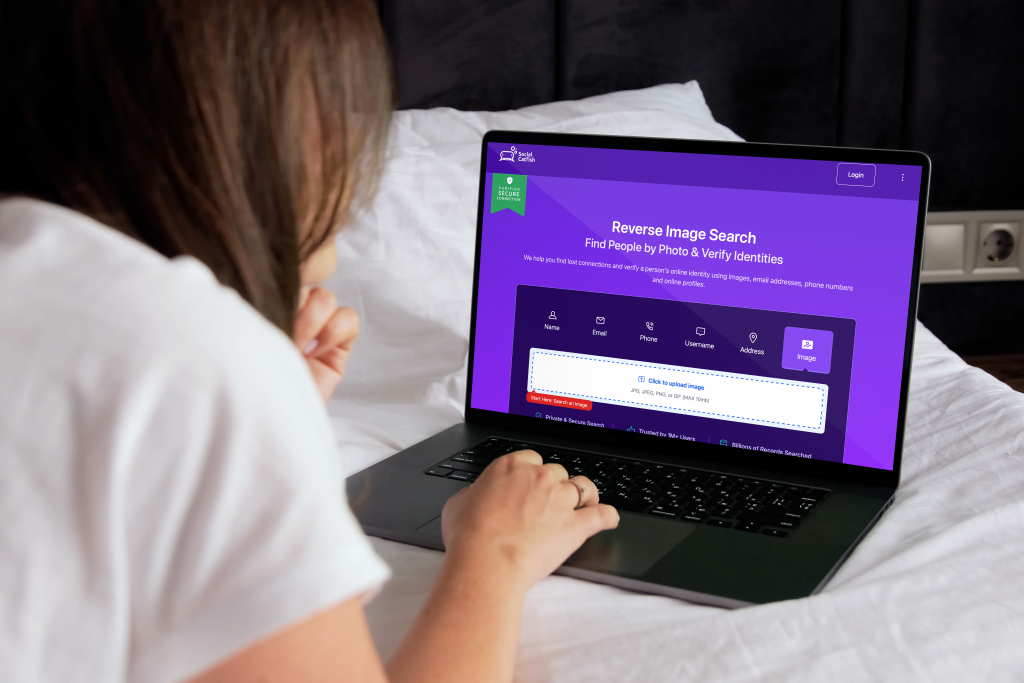
Verify Before You Trust
Use Social Catfish verification tools:
Reverse Image Search: Upload profile photos to check if images appear on modeling sites, other dating profiles, or social media accounts with different names, indicating stolen photos used by bots.
Phone Number Lookup: If they provide a phone number for off-platform contact, verify it’s not a VoIP or burner number commonly used by scammers.
Email Verification: Check email addresses for newly created accounts or connections to known scam operations.
Safe Grindr Practices
Protection strategies:
Never click unsolicited links: No legitimate user requires link verification before conversation or meeting. Any link within first exchanges is a scam.
Keep conversations on-platform: Legitimate connections don’t need to rush off Grindr. Moving platforms immediately suggests avoiding platform monitoring.
Request video verification: Before meeting or sharing personal information, request video call showing they’re the person in photos and capable of real-time spontaneous conversation.
Don’t share intimate content: Never send explicit photos or videos to someone you haven’t met in person, regardless of how genuine the connection feels.
Meet in public first: Initial meetings should be in public places where safety is ensured and identity can be verified face-to-face.
Trust your instincts: If something feels off, too perfect, too fast, too urgent, it probably is. Bots count on users ignoring red flags.
Security Best Practices
Account protection:
Use unique passwords: Don’t reuse Grindr password across other accounts—data breaches could compromise multiple services
Enable security features: Use all available Grindr security settings including login verification
Don’t share sensitive info: Keep personal details like full name, workplace, address, or financial information private
Review app permissions: Limit what Grindr can access on your device to only necessary functions
Update regularly: Keep Grindr app updated to latest version with newest security patches
Frequently Asked Questions
Look for multiple red flags: immediate link sharing, pushing to move off-platform quickly, too-perfect photos, scripted generic responses, and avoiding video calls. Use Social Catfish reverse image search to verify photos aren’t stolen. Real users have authentic conversations, don’t pressure verification through links, and are willing to video chat before meeting.
Malicious links can steal your Grindr login credentials, install malware on your device, subscribe you to expensive services without consent, or collect personal information for identity theft. If you clicked a bot link, immediately change your Grindr password, run antivirus scans, monitor your accounts for unauthorized charges, and enable two-factor authentication on all accounts.
Bots can collect any photos you send through the app, which is why you should never share intimate content with people you haven’t met. Additionally, if you click on malicious links or install bot-recommended apps, malware can access your device’s photo library, contacts, and other sensitive data.
Grindr actively removes bots, but scammers create new accounts faster than any platform can eliminate them. Advanced AI makes bots harder to detect automatically, and scammers constantly evolve tactics to bypass security measures. User reporting is crucial; the more users report bots, the faster Grindr can identify and remove them.
Don’t pay. Immediately report the account to Grindr, block the user, file a report with the FBI IC3 at ic3.gov, document all threats and evidence, and tell someone you trust. Paying doesn’t stop threats; it proves you’ll pay and invites greater demands. Most sextortion bots move on when victims don’t engage.
Conclusion
Grindr bots have evolved into sophisticated AI-powered scams using realistic conversations, stolen photos, and behavioral mimicry. They target users through link phishing, romance fraud, sextortion threats, and malware distribution.
Social Catfish provides verification tools to protect you from reverse image search to detect stolen photos, phone verification to confirm identities, and background checks before you trust suspicious profiles.
Never click unsolicited links, keep conversations on-platform initially, request video verification before meeting, and report bots immediately to protect the community.
Real people don’t require link verification before conversation, rush you off-platform within minutes, or request money from matches they’ve never met. If someone seems too perfect, too urgent, or too scripted, you’re talking to a bot.