
 Multiple Faces Detected



 July 23rd, 2026
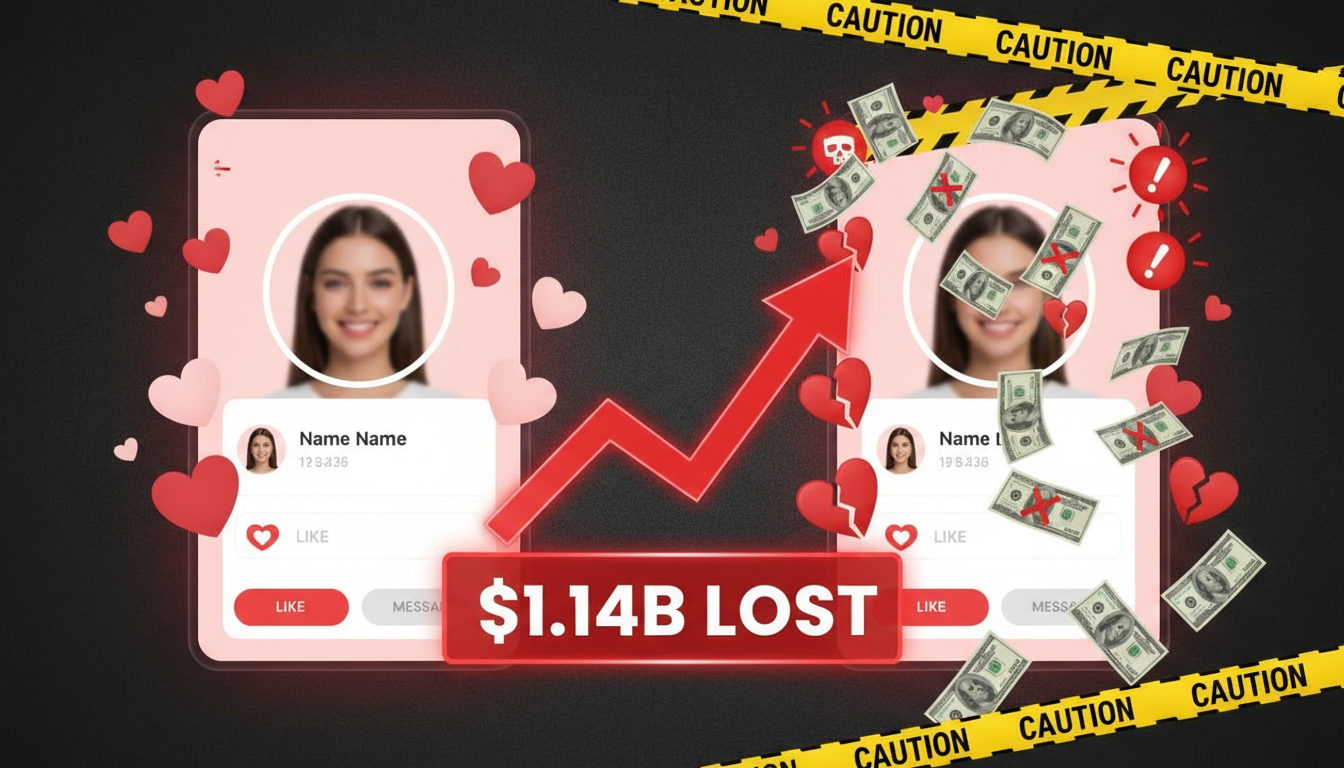
Google’s own AI Overview will tell you the single biggest Tinder red flag: a match who wants to move your conversation off the app fast. That is real, but it is one signal among several. Romance scams cost Americans $1.16 billion in the first nine months of 2025 alone, with a median loss of $2,218 per victim. Here are the nine warning signs that show up most often on Tinder, and what to do when a match is showing more than one of them.
Tinder Red Flags: The 9 Warning Signs to Watch For
1. Pushing to Move Off Tinder Fast
This is the top red flag Google surfaces for this query, and it is at the top of this list for the same reason it is the single most consistent behavior across documented Tinder scams. A match who pushes to move the conversation to WhatsApp, Snapchat, or Telegram within hours of matching, before any real vetting has happened, is trying to get you off a platform with moderation and reporting tools onto one where they operate without accountability.
Legitimate matches who want to talk more do not need to leave Tinder immediately. The urgency to move platforms serves the scammer, not you. For a full breakdown of how this plays out specifically on WhatsApp, see our Tinder WhatsApp Scam guide.
2. Love Bombing
Intense affection, declarations of a deep connection, future-talk, or a relationship label within days of matching is called love bombing, and it is a deliberate manipulation tactic, not a sign of an unusually compatible connection. Scammers escalate emotionally fast to create a sense of obligation and investment before asking for anything. Real relationships develop over time. A match who feels like a soulmate after three days of texting and no video call is a red flag regardless of how genuine the messages feel.
3. Avoiding Video Calls or In-Person Meetings
A pattern of excuses every time you suggest a video call or a date is one of the clearest available signals that a match is not who their photos suggest. Scammers using stolen photos cannot appear on camera as the person they are pretending to be. The excuses are often plausible: bad connection, camera broken, busy at work, but the pattern of them is the signal. One excuse is understandable. A consistent inability to ever appear on camera is not.
4. Inconsistent Personal Details
Details that do not add up across a conversation are worth noting. A claimed location in one city combined with message timestamps that only make sense in a different time zone. A stated age that does not match the apparent age in their photos. A job or lifestyle that is inconsistent with other things they have said. Scammers manage multiple conversations simultaneously and sometimes lose track of the details they have provided. Inconsistencies are not always proof of deception, but they are always worth noting. For more on location inconsistencies specifically, see our guide on Tinder location spoofing tactics.
5. Mentioning an Investment Opportunity
Any introduction of cryptocurrency trading, investment platforms, or financial opportunities into a romantic conversation is the signature pattern of pig-butchering fraud, one of the most financially devastating romance scam types documented by the FBI. The introduction is almost always gradual: they mention a platform where they have made money, offer to show you how it works, and guide you toward depositing funds into what turns out to be a fraudulent site. The romantic connection is the vehicle for the financial fraud, not a separate thing. Any investment mention from a dating app match should be treated as an immediate and serious red flag.
6. A Generic Bio With Professional-Looking Photos
A bio that could describe anyone who loves traveling, enjoys good food, and is looking for something real, paired with heavily filtered or professionally shot photos, is a consistent pattern in fake Tinder accounts. Real people have specific, idiosyncratic bios. Real profile photos include candid shots, group photos, and environmental context. A profile that looks like a stock photo set attached to a marketing tagline is worth verifying before investing further. For more on what a legitimate Tinder bio looks like versus a fake one, see our guides on fake Tinder accounts and recognizing legitimate Tinder bios.
7. Bot-Like Responses
Instant responses at any hour, generic answers that do not quite engage with what you specifically said, and a lack of the natural variation in response time that real people show are all signals of automated or scripted chat behavior. Bots on Tinder are more sophisticated than they used to be, but they still show patterns that feel slightly off when you pay technically relevant answers but miss the specific nuance of what you asked, or engagement that maintains a consistent enthusiastic tone regardless of what the conversation is actually about. For a full breakdown of how to tell if your match is a bot, see our Tinder bots guide.
8. Requests for Money, Gifts, or Verification Codes
Any request for money in any form wire transfer, gift cards, cryptocurrency, or direct PayPal from a dating app match should be treated as a scam signal without exception. The same applies to requests for verification codes sent to your phone, which scammers use to hijack accounts rather than to verify anything legitimate. Requests framed as emergencies, as proof of trust, or as a temporary loan all follow the same pattern. No genuine romantic connection that has not progressed to an established real-world relationship involves financial requests. For the full breakdown of how Tinder’s verification code scam and other financial scams work, see our guide to Tinder scams to avoid.
9. Discomfort or Deflection When You Suggest Verifying Their Photo
A genuine match has no reason to object to you verifying that their photos are real. A scammer using stolen photos has every reason to deflect, change the subject, or manufacture reasons why that is unnecessary or offensive. If you mention running a reverse image search and your match reacts with defensiveness, urgency to move past the topic, or sudden emotional withdrawal, treat that reaction as a signal rather than accepting the explanation for it. For instructions on how to reverse image search a Tinder profile photo, see our reverse image search on Tinder guide.
How Many Red Flags Is Too Many?
One flag alone is rarely proof. A match who wants to move to WhatsApp quickly might simply prefer that platform. A match who is slow to schedule a video call might genuinely have a busy schedule.
The pattern is what matters. Two or more flags together, particularly the off-platform push combined with any financial ask, any investment mention, or any consistent camera avoidance, is where coincidence becomes pattern. The specific combination of love bombing plus camera avoidance plus an eventual financial request is the documented sequence for most romance scams. None of those alone is definitive. Together they describe a trajectory that is worth acting on before any money or personal information changes hands.
What to Do If Your Match Is Showing Red Flags
Reverse image search their profile photo:
Upload their main photo to Social Catfish's reverse image search. The facial recognition searches across social media, dating platforms, and other indexed sites, finding where that face appears and under what names. A stolen photo traces back to its real owner. An AI-generated photo returns no results across a genuinely comprehensive search. Either result tells you more than the profile itself does.
Run a name or username check:
If they have shared a name, enter it into Social Catfish's username search. The search returns every platform where that identity appears and the history behind it. A genuine person has a consistent, verifiable presence. A fabricated identity typically exists only on the dating app with no corroborating presence elsewhere.
Do not send money, gifts, or codes:
Regardless of the explanation emergency, temporary loan, verification requirement do not send anything of financial value or share any authentication code with a dating app match. These requests are the endpoint of scam sequences that began with the red flags above.
Trust the pattern over individual explanations:
Scammers are skilled at providing plausible explanations for each red flag. The explanation for avoiding video calls sounds reasonable. The explanation for needing to move platforms sounds reasonable. The investment pitch is introduced carefully. Evaluated individually, none of them triggers alarm. Evaluated as a pattern, they describe a documented sequence. Trust the pattern.
FAQ
A match who wants to move the conversation off Tinder to WhatsApp, Snapchat, or Telegram quickly, before you have had a chance to verify who they are. This is the top red flag identified by Google's AI Overview for this query and the most consistent behavior across documented Tinder scams.
No single flag is definitive on its own. Two or more together, especially the off-platform pressure combined with any financial ask, investment mention, or consistent camera avoidance, is a strong signal to stop and verify independently before continuing the conversation.
Yes, particularly on profiles with instant, generic responses that do not quite engage with the specifics of what you said. For a full breakdown of the signs your match may be a bot rather than a real person, see our Tinder bots guide.
It helps but is not foolproof. Tinder's photo verification confirms the person matches their profile photos at the time of verification. It does not confirm their intentions, their identity beyond the photos, or prevent a verified account from being used for deceptive purposes after verification is complete.
Verify their photo and identity independently using Social Catfish's reverse image search and username search before agreeing to meet. Confirm they can appear on a live video call. For full guidance on meeting safely, see our Tinder guide on how to meet someone safely.
Conclusion
Each of the nine red flags above has appeared in documented Tinder scam cases. None of them alone is proof. Together, particularly when the off-platform push, camera avoidance, and a financial ask appear in sequence, they describe a pattern that costs the average victim over two thousand dollars and months of emotional investment before it becomes clear what was actually happening.
The practical response is the same for every flag on this list: verify independently before you trust, and run a Social Catfish reverse image search and name check before any conversation progresses to financial requests or in-person meetings. A genuine match passes that check without issue. A scammer does not.