

 Multiple Faces Detected


 March 7th, 2026
It starts with two words: “Hey beautiful.”
A message arrives from a stranger. He is handsome, successful, attentive, and somehow instantly interested in you. The conversation flows effortlessly. He remembers everything you tell him. He calls you beautiful, says he has never felt this way before, and asks questions no one has ever thought to ask. Within days, it feels like something real.
That is exactly what it is designed to feel like.
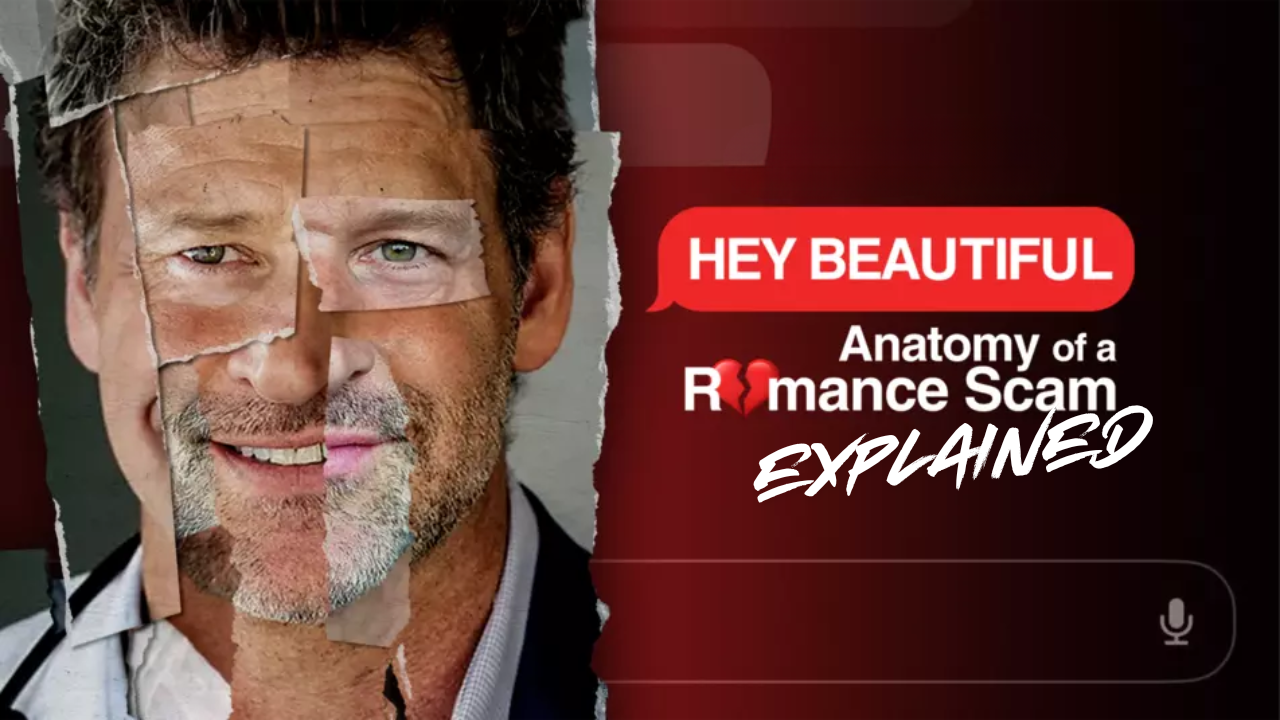
Hulu’s 2025 docuseries Hey Beautiful: Anatomy of a Romance Scam followed three women, Roxy from Connecticut, Annette from Canada, and Gaby from Germany, who each fell in love with the same man. Same photos, charm, scripted affection, and same ending. One woman wired over $30,000. Another lost more than $1 million. None of them ever met him.
The FBI reported $16.6 billion in cybercrime losses in 2024, a 33% increase from the year before. Romance scams were among the most financially devastating categories. And they are getting harder to detect.
Think you might be talking to someone who is not who they claim to be? Run their photo or name on Social Catfish before the connection goes any further.
Stage 1: Finding the Right Target
Romance scammers do not cast a random net. They cast a specific one.
Before a single message is sent, the scammer has already done research. They scan social media profiles for signals of vulnerability, recent posts about loneliness, divorce, grief, or a death in the family. A 2025 State of the Nation report found that one in ten U.S. adults reported having no close friends or family they could turn to for help. Scammers read those signals clearly.
In Hey Beautiful, the three victims each had something in common at the time they were targeted. Annette had just gone through a divorce, lost her home, and lost her dog all in the same week. Roxy and Gaby were each seeking connection in different ways. The scammer did not stumble onto them by accident. He, or the operation behind him, was looking for exactly that profile.
This is why the “I would never fall for that” assumption is dangerous. Scammers are not looking for gullible people. They are looking for people in a specific emotional state, one that most people move through at some point in their lives.
Stage 2: Building the Perfect Persona
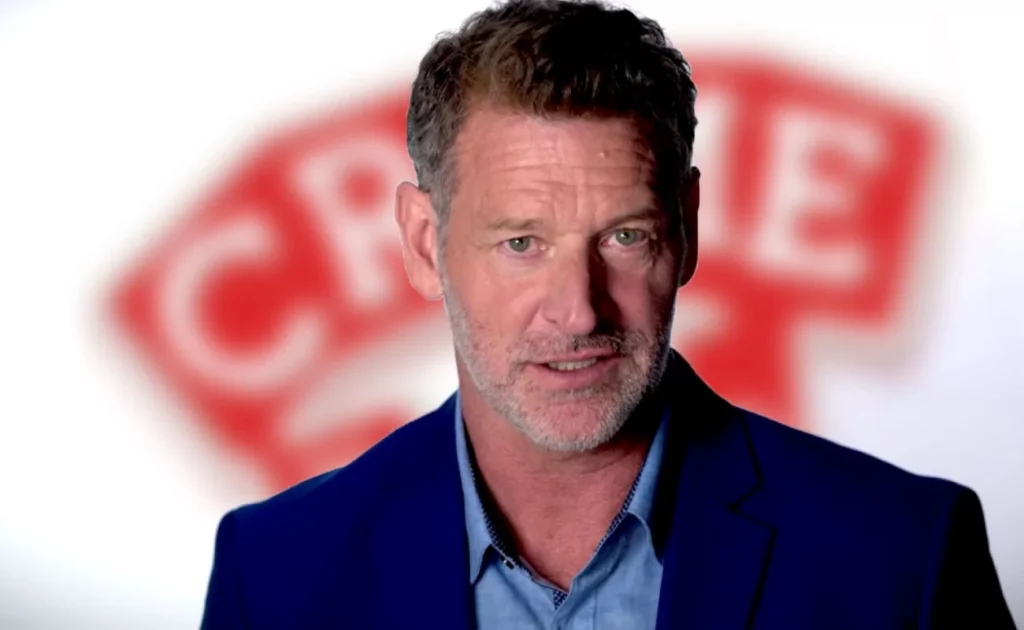
The face in the photos was real. It belonged to Brian Haugen, a Los Angeles makeup artist and performer whose images were stolen from his social media accounts and used across thousands of fake profiles worldwide without his knowledge. Haugen and the docuseries director later discovered the scale of the theft: his likeness had been weaponized to scam women on every continent.
This is how modern romance scams work. The photos are stolen from real, attractive people with active social media presences. The identities are fabricated in Hey Beautiful; the same scammer used the names Scott Donald Hall, James Richards, and Michael Silver interchangeably across different victims. The backstories are engineered for maximum credibility: successful businessman, oil rig engineer, military officer, widowed father. Personas that explain why he cannot meet in person, why he travels constantly, and why video calls are difficult.
AI and deepfake technology have made this stage significantly more dangerous. Scammers can now generate synthetic voices, manipulate video, and produce custom images that have never existed anywhere on the internet, meaning reverse image searches come up empty, creating false confidence that the person is real.
Stage 3: Love Bombing
Once contact is made, the emotional escalation begins, and it is deliberate, calculated, and relentless.
Love bombing is the practice of overwhelming a target with affection, attention, and flattery far faster than any real relationship would develop. Messages arrive morning and night. He says you are unlike anyone he has ever met, asks about your childhood, your dreams, your fears, remembers every detail, and brings them back up days later. He calls you beautiful constantly.
Research on romance scam psychology describes this phase as the “grooming stage,” a period of intense communication designed to build attachment and dependence. Victims are not falling for a lie in this moment. They are falling for an experience that feels more attentive and emotionally present than most real relationships they have had.
AARP interviewed a licensed therapist who works with romance scam victims and described love bombing as “an all-consuming experience where you are bombarded with attention and affection, 24 hours a day.” The goal is to make you feel like the most important person in the world because that emotional state is far easier to exploit than doubt.
Stage 4: Isolation
As the relationship deepens, the scammer begins working to cut the victim off from anyone who might raise concerns.
It rarely happens overtly. It is more subtle than that. He suggests the relationship is something special that other people would not understand, becomes hurt or withdrawn when you mention spending time with friends or family, and frames your loved ones’ skepticism as jealousy or small-mindedness. Over time, you find yourself spending more time talking to him and less time confiding in the people who know you best.
Research confirms this pattern consistently. Scammers isolate victims to increase dependency and remove the social checks that might interrupt the scam. When Annette’s bank raised concerns about the $30,000 transfer she was about to make, the scammer had already spent enough time in her life that his influence outweighed the bank’s warning. She sent the money anyway.
Stage 5: The Crisis
The financial request almost never arrives early. That is the point.
By the time a scammer asks for money, weeks or months of emotional investment have already been made. The victim is not handing money to a stranger. They are helping someone they love through an emergency.
The crisis stories follow predictable patterns:
- A sudden medical emergency requiring surgery
- A business deal gone wrong that needs a temporary bridge payment
- Legal trouble that can be resolved with a wire transfer
- Customs fees on a package that contains something valuable intended for you
- Travel costs to finally come meet you in person
In Hey Beautiful, the financial requests started small and, with repayment, were a deliberate tactic. Annette received her first $10,000 back, which built enough trust for the next ask of $30,000. Gaby’s total losses eventually exceeded $1 million, accumulated over a long period as the scammer escalated each request incrementally.
Researchers call this the “sting” phase, but the buildup to it is what makes it work. By the time someone is wiring thousands of dollars to a person they have never met, they are not acting irrationally from their own perspective, they are acting on months of carefully constructed evidence that this person is real and that the emergency is genuine.
Stage 6: The Disappearance
When the money stops flowing, either because the victim runs out, grows suspicious, or refuses a request, the scammer disappears.
Sometimes it is abrupt. The account goes silent overnight. Sometimes there is a dramatic final exit: an accusation that you never really loved him, a guilt trip, a threat. In some cases, as the victims in Hey Beautiful discovered, the disappearance leads to a dangerous confrontation when victims attempt to investigate. The docuseries noted that trying to expose some operations can become a matter of personal safety.
What is left behind is not just financial loss. Research consistently shows that romance scam victims experience lasting psychological damage, depression, anxiety, difficulty trusting again, and significant shame that prevents many from reporting what happened or seeking help.
How to Verify Someone Before It Gets This Far
The good news is that every stage of a romance scam leaves traces if you know where to look.
Run a reverse image search on their photos. If the photos are stolen from a real person’s social media, they may appear under a different name elsewhere online. Upload their profile photo to Google Images or TinEye. This will not catch AI-generated images, but it catches the majority of photo theft cases.
Search their name, photo, username, email, or phone number on Social Catfish. Social Catfish cross-references that information across a wide range of databases to verify whether the identity is real, whether the photos have been used elsewhere, and whether the contact details are associated with known scam activity. This is exactly the kind of verification the victims in Hey Beautiful needed before the financial requests began, and the kind that can stop a scam at Stage 2 rather than Stage 5.
Request a spontaneous, unscheduled video call. Not a planned one. Real people can hop on camera on short notice. Scammers operating through stolen photos or AI-generated personas cannot. Ask them to do something specific on camera, hold up a piece of paper with your name on it, and wave with their left hand. Scripted or synthetic video cannot adapt in real time.
Tell someone. The isolation tactic only works if you comply with it. Tell a trusted friend or family member about this person early. If they raise concerns, listen. Scammers frame outside skepticism as a threat to the relationship because it is to their relationship with your money.
Notice how you feel when you consider doubting them. This is subtle but important. If the thought of questioning this person’s identity fills you with guilt, defensiveness, or fear of losing them, that emotional reaction may itself be a product of the grooming. Healthy relationships can withstand a simple identity check.
FAQ
The scammer’s real identity was never definitively confirmed. The operation used multiple fake personas, Scott Donald Hall, James Richards, and Michael Silver, and stole photos from a real person, Brian Haugen, a Los Angeles makeup artist. Investigators believe the scam may have been run by an organized criminal network rather than a single individual.
Yes. Romance scammers do not target unintelligent people; they target people in vulnerable emotional states, which includes most people at some point in their lives. The psychological techniques used are sophisticated, professionally developed, and specifically designed to bypass critical thinking.
Love bombing is an emotional manipulation tactic where a scammer overwhelms a target with intense attention, affection, and flattery very early in a relationship. It is designed to build rapid emotional attachment and dependency before the scammer begins to exploit that attachment.
Run their photos through a reverse image search and search their name, email, or phone number through Social Catfish. Request a spontaneous video call on short notice and ask them to do something specific on camera. Tell someone you trust about the relationship and take their reaction seriously.
Stop sending money immediately. Do not share further personal or financial information. Reach out to a trusted friend or family member. Report the scam to the FTC at ReportFraud.ftc.gov and to the FBI at IC3.gov. Contact your bank if money has been transferred. You are not alone. Romance scams are among the most reported and most psychologically damaging forms of fraud, and recovery support is available.
The Bottom Line
Hey Beautiful made visible what most victims describe only after the fact: how methodical, patient, and psychologically sophisticated these operations are. The women in the docuseries were not naive. They were targeted, groomed, isolated, and manipulated by people who do this professionally at scale.
The scam starts with “hey, beautiful.” It ends with everything you have if you let it get that far.
Search the name, photo, or contact details of anyone you have met online on Social Catfish and know who you are really talking to before you go any further.











