
 Multiple Faces Detected


 January 15th, 2026
Online scammers have always relied on fake photos, stolen images of attractive people, and fabricated identities designed to manipulate victims. For years, victims had limited tools to verify these images beyond basic reverse image searches that often missed sophisticated fakes.
Now, artificial intelligence is revolutionizing fraud detection. The FBI’s Internet Crime Complaint Center recorded $16.6 billion in losses in 2024, a 33% increase from 2023, with deepfakes and AI-generated images driving much of this surge. AI image detectors can now analyze photos at levels human eyes can’t match, identifying manipulated images, AI-generated faces, and stolen photos.
Traditional verification methods struggle against scammers using deepfakes, AI-generated faces, and professionally edited stolen photos. AI image detection technology analyzes subtle inconsistencies invisible to the naked eye, unnatural lighting, pixel-level manipulation, facial anomalies, and digital fingerprints, revealing an image’s true origin.
Social Catfish combines AI-powered image analysis with comprehensive reverse image search to verify anyone’s photos and expose deception before you’re scammed.
What is an AI Image Detector?
An AI image detector is software powered by artificial intelligence that examines digital images for signs of manipulation, forgery, or artificial generation. Unlike traditional reverse image search tools that rely on pixel-for-pixel matches, these detectors analyze metadata, lighting, noise patterns, and structural inconsistencies using machine learning. Their goal? To determine if an image is authentic, or an AI-generated fake.
These tools are invaluable for anyone wanting to know how to tell if an image is AI generated, a growing concern in today’s digitally manipulated world. Whether you’re trying to spot fake social media accounts or assess the legitimacy of an online product photo, knowing how these tools function gives you a significant edge.
The Rise of AI in Image Manipulation
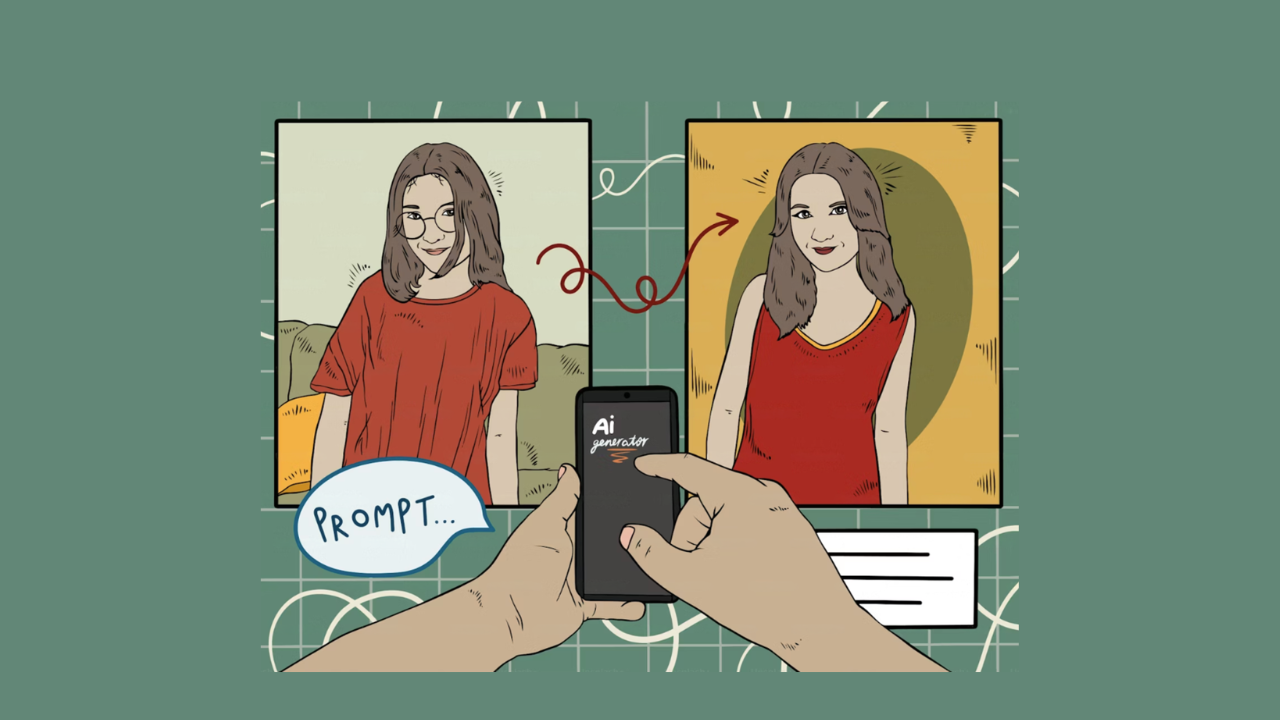
The past few years have seen a surge in tools that allow virtually anyone to create realistic-looking images in seconds. Apps like FaceApp, Midjourney, and DALL·E have made it easy for users to experiment with image generation. But while these tools can be fun, they’ve also opened the door for scammers.
In the early 2010s, scammers primarily relied on stolen celebrity or model photos. But today, they generate synthetic faces that don’t belong to anyone. These faces are harder to trace and nearly impossible to prove fake without the use of a detection tool. That’s where modern AI image detectors come in; they give people the power to push back.
How Online Scammers Use AI to Manipulate Photos
Scammers are increasingly turning to AI to create fake images. For instance, in romance scams, they might use AI-generated faces from tools like StyleGAN, making it impossible to reverse-search the image. Business email compromise (BEC) attackers can fabricate realistic photos of executives, sometimes appearing in video calls using deepfake technology.
Real estate scams often feature doctored images that showcase enhanced property features—or hide damage. Likewise, scammers promoting counterfeit products rely on stunning but AI-created imagery. In extreme cases, criminals generate explicit content using a real person’s facial features and use it for blackmail.
Want to see if someone’s using your photo? Learn how to check if an image is stolen.
How AI Image Detection Tools Work
An effective AI image detection tool uses multiple techniques to assess whether an image is authentic. First, it examines the image’s content for inconsistencies in texture, light, and shadow. A photo that looks normal to the human eye may have subtle flaws, such as mismatched lighting or unusually smooth skin textures, that indicate it was generated or heavily edited.
The tool also analyzes metadata. A photo’s EXIF data may reveal discrepancies such as a different location or date than expected. It can detect manipulated noise patterns too; real photos include organic digital noise, while fake images often show smoothing or repeating textures.
Some AI tools include reverse image lookup functionality that compares the photo to a database of known images. If the same face appears on multiple unrelated profiles, that’s a red flag. Contextual verification is another layer: it cross-references the photo’s elements (like weather, clothing, or background architecture) against known variables. You can also use facial recognition AI to validate identities visually.
Understanding these features helps users confidently distinguish fake photos from real ones.
Types of AI Image Detectors
There are a few types of image detectors, each suited for different tasks. Some tools focus solely on deepfakes, scanning for subtle facial anomalies like blinking patterns or lip-sync mismatches. Others are trained to detect image edits, these are great for finding Photoshop-based scams in product listings or social profiles.
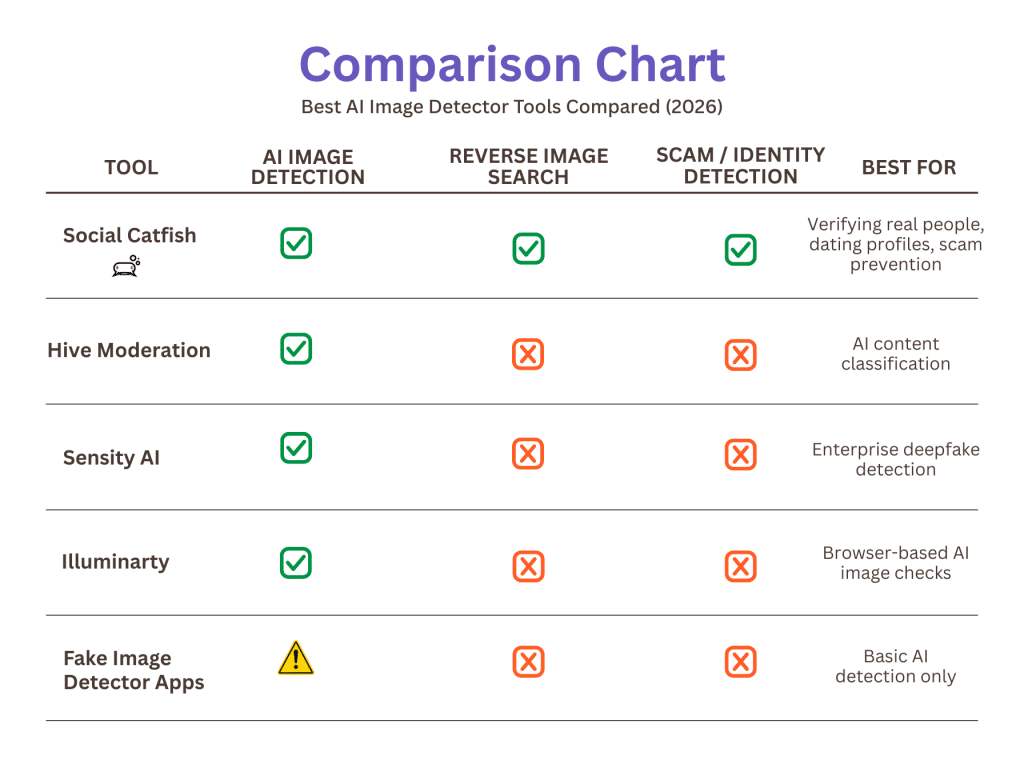
Then there are hybrid detectors, like those used by Social Catfish, which combine image forensics, metadata inspection, and traditional reverse image search. This layered approach makes it easier to flag suspicious content and spot deception from multiple angles.
When and Why to Use an AI Image Detector
You don’t need to be a cybersecurity expert to benefit from AI image detectors. These tools help:
- Online daters verify profile pictures
- Shoppers ensure product listings aren’t scams
- Renters confirm that real estate listings aren’t fake
- Businesses vet new hires or partners
- Social media users detect impersonation accounts
They are especially useful for those wondering how to tell if an image is AI generated, even if the photo seems visually convincing.
Best AI Image Detection Tools
AI image detection technology has advanced rapidly, with multiple tools now available to help verify photos and identify manipulated or AI-generated images. Here are the most effective options for detecting fake images and protecting yourself from scams.
Social Catfish
Social Catfish combines AI-powered image analysis with comprehensive reverse image search to provide the most complete verification solution. Upload any photo to discover:
- Whether the image is AI-generated or manipulated
- Where else the photo appears online
- If it’s being used across multiple fake profiles
- The real identity of the person in the photo
- Connected social media accounts and dating profiles
Social Catfish’s technology specifically targets romance scam detection, making it ideal for verifying dating matches, investigating suspicious profiles, and confirming identities before meeting someone in person.
Here are a few trusted tools that detect AI-generated or manipulated images:
- Hive Moderation: Scans for deepfakes and AI-altered visuals across images and videos.
- Sightengine: Detects AI content and unsafe visuals using robust APIs.
- WasiTAI: Specializes in identifying GAN-generated faces and deepfakes.
Why Social Catfish Stands Out
Unlike standalone AI detection tools that only identify whether images are fake, Social Catfish provides complete identity verification:
- AI detection combined with reverse image search
- Identity confirmation through multiple databases
- Dating profile discovery across hundreds of platforms
- Phone number, email, and username verification
- Comprehensive reports for fraud investigation
For protecting yourself from romance scams, catfishing, and online fraud, Social Catfish’s combination of AI detection and identity verification delivers the most actionable results.
We also show related contact details, potential social accounts, and even location history if available. If an image has been used in scams, it may appear in fraud reports. For cases involving romance fraud, fake job recruiters, or blackmail, our Search Specialists can take the investigation deeper. Want to stay ahead of emerging threats? Read more about online fraud trends and predictions.
FAQs
1. What is an AI image detector and how does it work?
An AI image detector analyzes photos to determine if they’re authentic, AI-generated, or manipulated. It examines pixel patterns, lighting inconsistencies, facial anomalies, and digital fingerprints that reveal whether an image was created by AI, edited with software, or is a genuine photograph.
2. Can AI image detectors identify deepfakes and face swaps?
Yes, advanced AI detectors identify many deepfakes by analyzing subtle inconsistencies in facial features, lighting, and pixel-level artifacts. However, as deepfake technology improves, combining AI detection with reverse image search tools like Social Catfish provides the most comprehensive verification.
3. Are AI image detectors accurate?
High-quality AI detectors achieve 85-95% accuracy in identifying AI-generated images, although accuracy varies depending on the image quality and sophistication of the fake. No tool is 100% reliable, which is why using multiple verification methods, AI detection, plus Social Catfish’s reverse image search, provides better protection.
4. How can I tell if someone is using AI-generated photos on dating apps?
Upload their photos to Social Catfish’s reverse image search or AI detector. Warning signs include overly perfect faces, unnatural lighting, blurred backgrounds, strange artifacts around hair or accessories, and photos that don’t appear anywhere else online.
5. Do I need technical skills to use AI image detection tools?
No. Tools like Social Catfish are designed for everyday users. Upload the photo, and the tool analyzes it automatically, providing easy-to-understand results about whether the image is authentic, AI-generated, or manipulated.
Conclusion
The fight against online scams has entered a new era. As scammers adopt AI-generated images, deepfakes, and sophisticated manipulation tools, traditional verification methods alone can’t keep up. AI image detection technology provides the advanced analysis needed to expose these increasingly convincing fakes.
But AI detection is just one piece of the puzzle. The most comprehensive protection comes from combining AI analysis with reverse image search, identity verification, and background checks, exactly what Social Catfish provides.
The scammers are using AI. You should, too. Protect yourself with Social Catfish’s AI-enhanced verification tools today.