 Multiple Faces Detected



 January 22nd, 2026
People use their email inboxes on a daily basis to communicate with their loved ones, keep in touch with their workplace, and receive the latest updates from their favorite stores. However, scammers also use email services to scam victims out of their hard-earned money by pretending to be your favorite stores, making it seem like someone needs help, or by claiming that you won millions of dollars. Today at Social Catfish, I decided to dive into my spam folder to see what tactics scammers are using to scam their victims out of money. I wanted to share with you just how convincing and real these emails look and how to determine whether or not the email you are looking at is a scam. Keep scrolling to view some example scam email messages that you should watch out for.
Scam Email Messages to Watch Out For

#1: Netflix Phishing Email
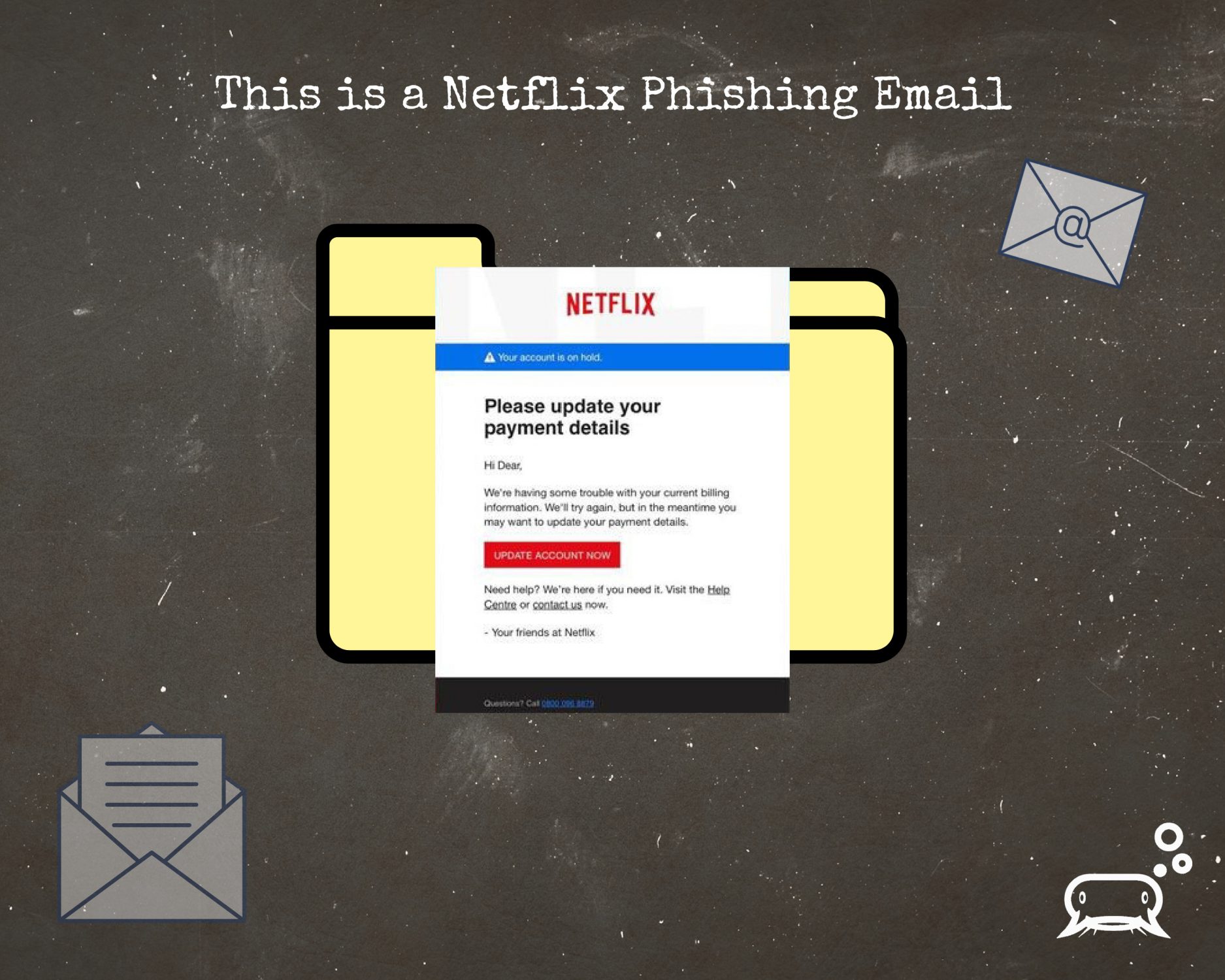
The Netflix phishing email is making its round in victims’ inboxes, claiming that their account is on hold unless they get an updated payment method. The victims click the button, thinking that it’s a legit email, and log in to their Netflix account using their email and password. They input their payment details, and they think that they fixed the issue.
However, as real as this email may look, the victims just entered their information on a fake Netflix site. Now the scammer has access to their account information and their payment method and can steal thousands of dollars from them. If you are unsure this email is real, try watching something on Netflix before clicking on anything.
If you are still able to watch TV without having to put in a payment method, then you know this email is a scam. However, if you can’t watch TV unless you make a payment, then make it through the official Netflix site. Never click on links in emails claiming to be Netflix. They also state that they will never ask for payment details or account information by emailing or calling you. Next time you get this email, just keep in mind that it would literally be impossible to binge your favorite shows if this were true.
#2: Kohl’s Phishing Email
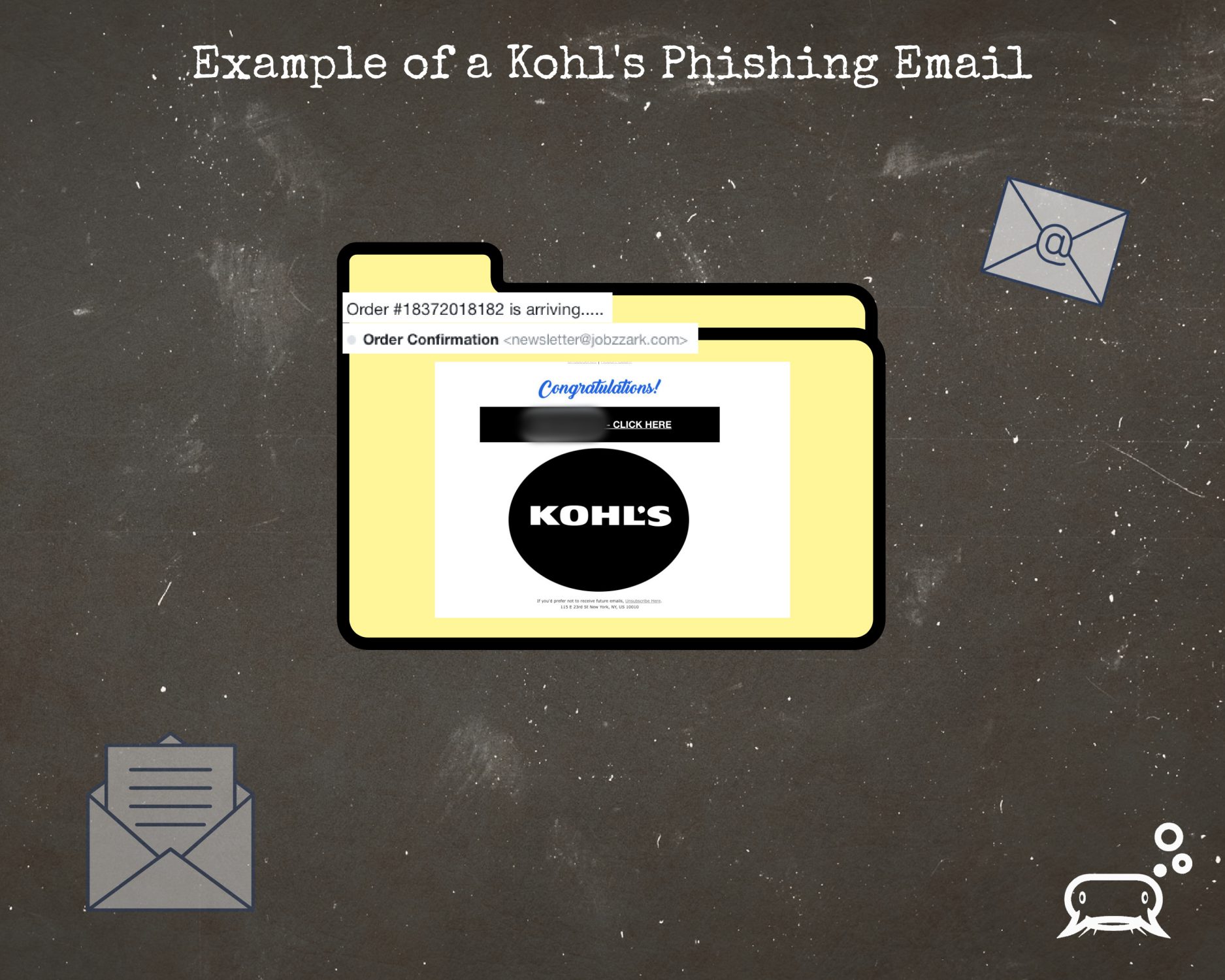
This email is a little confusing. The subject line claimed that I had an order arriving that I never placed, and when I went to open it, it said I won something. It then personalized the link to make me feel like it was a legit email message, then told me to click the link to see what I won from Kohls.
First, let me start by saying you should never click a link in a scam email since it could give your device malware and other viruses that could steal your information or shut your computer down. Second, if an email claims you ordered something from a store but you didn’t, chances are it’s a scam email.
Lastly, I was able to confirm that it’s definitely a scam email by looking at who the email was from. It claims to be from “[email protected].” If it were a legit Kohl’s email, it would be from “@kohls.com” and it wouldn’t prompt me to click on a link so badly.
#3: A Scammer Claims That They Need You to Watch Their Money
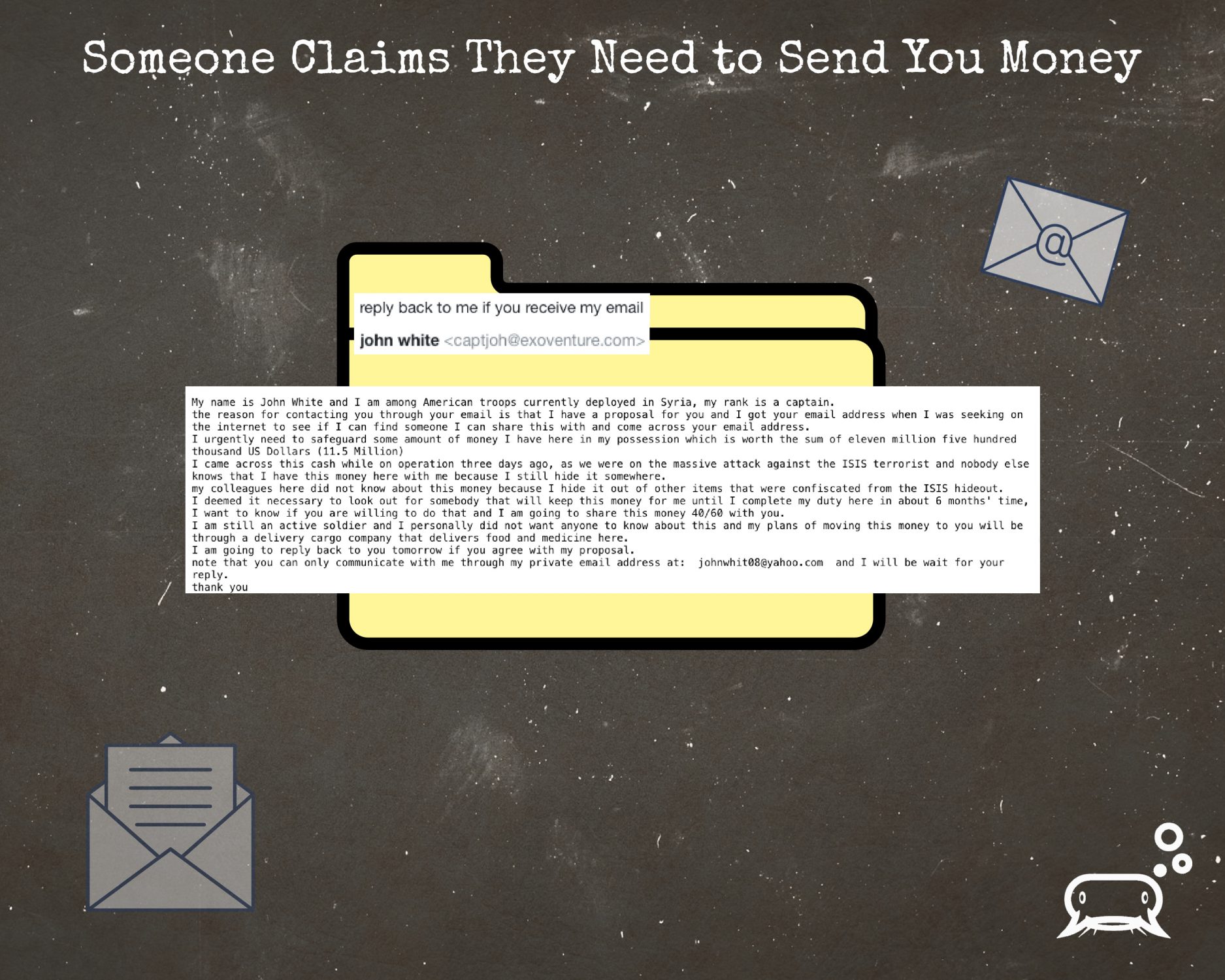
When looking at this email, I noticed right away that the scammer claimed to be in the “American troops” instead of claiming that they were “in the army,” “in the military,” or “in the navy,” like most people do when they are in the military. As I read on further, I saw that this supposed captain wanted me to safeguard 11.5 million dollars, and apparently, I’m trusted to do this even though he has no idea who I am.
The scammer used emotional appeal by claiming to be in the military so that I would think that I need to help this military captain since he supposedly serves this country. This scammer isn’t actually in the military and is just using this to make victims feel sorry for him and want to help him. Also, if the military really did come in contact with this money, they wouldn’t trust just anyone to watch this money. They would probably hire more military personnel to guard this money until it was shipped properly back to the government. Therefore, we can conclude that this is a scam.
#4: A Scammer Claims That You Won Money
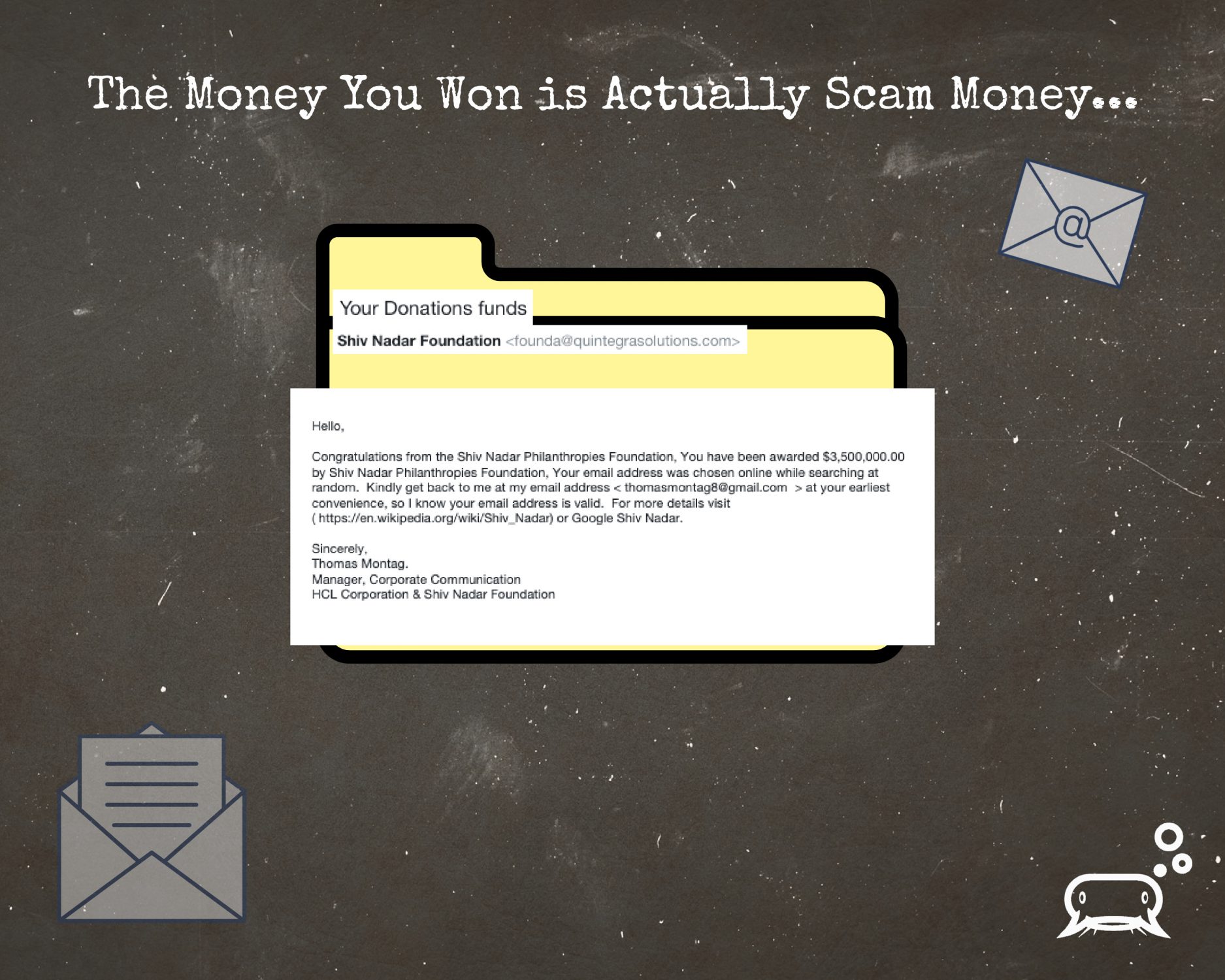
When reading this email, I realized that they tried to claim that they were legit by urging victims to google “Shiv Nadar.” Instead, I decided to Google “Shiv Nadar Scam” and found an official message from the Shiv Nadar official website that claimed these emails were fraudulent. If an email ever tells you to Google something or ever uses Wikipedia as a legit source instead of the official website, it is most likely a scam.
Also, this email claimed I won money and claimed I donated to this foundation even though I have never donated anything to them. If an email claims you won a large sum of money without you having to enter a sweepstake or donate anything to them, then it’s most likely a scam. There are also many emails that claim you donated something or entered something, even though you didn’t, just so that you’ll believe them. There are also many grammatical errors in this email which leads us to conclude that this email is a scam.
#5: Fake Credit Card Ad
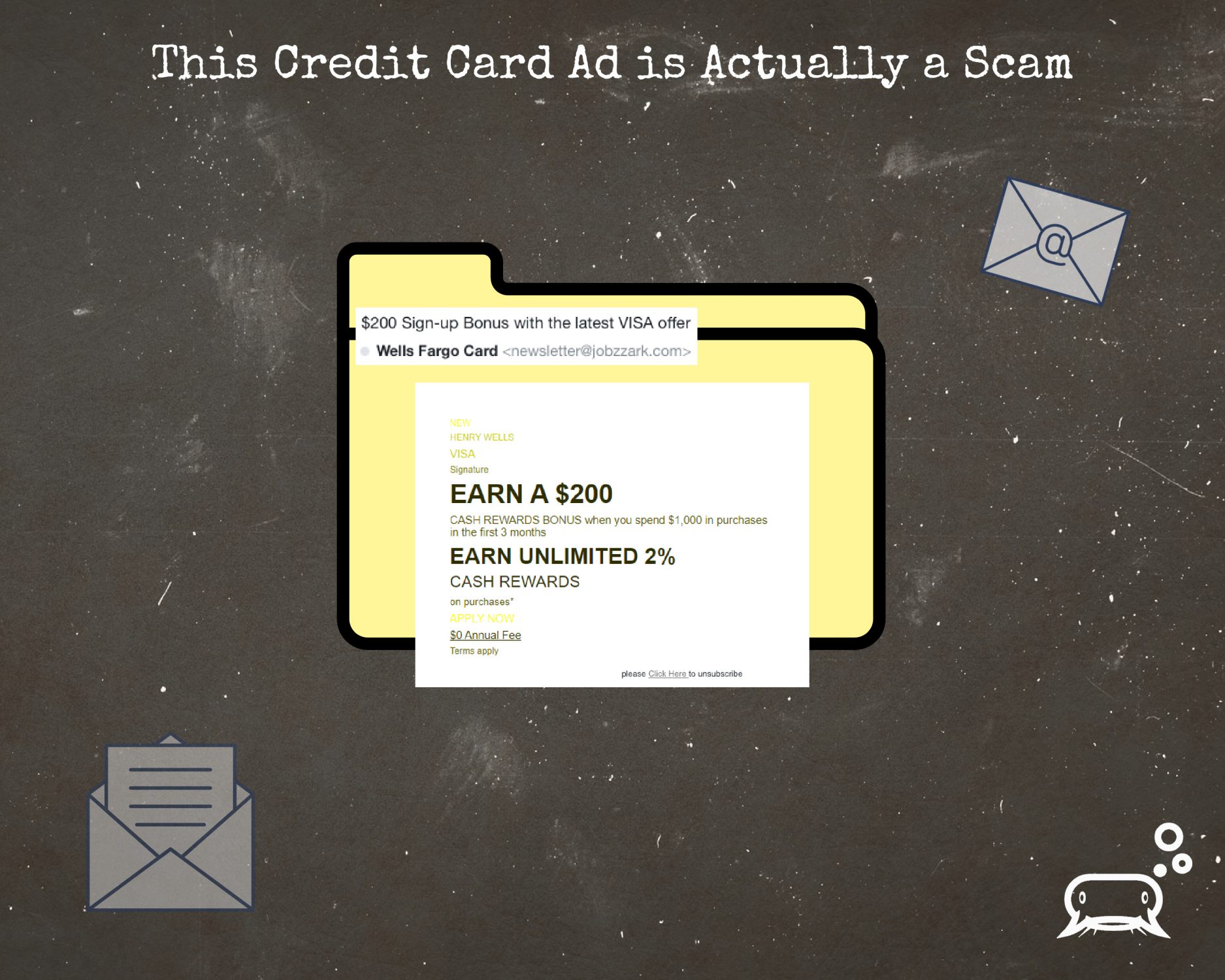
Before I even read the email, I noticed that the email this is from, “[email protected]” matches the email that sent me the Kohl’s phishing ad. Therefore, immediately I knew it was a scam since Wells Fargo and Kohl’s are not the same company, yet are supposedly using the same From email as each other. Legit emails from them would’ve come from email addresses that ended in “@kohls.com” or “@wellsfargo.com.”
As I continued to look at this email, I noticed that they addressed the email to a man named Henry Wells and didn’t address it to my name. They didn’t pay attention to details within their email, which most businesses would’ve done to satisfy their customers. The email also doesn’t have the Wells Fargo logo embedded in it, which can confirm that this email is a scam since all emails from Wells Fargo would have their logo in it.
How to Avoid Scam Email Messages

- If you get an email from a specific company, make sure that the email address contains their company name. For example, emails from Kohl’s should come from “kohls.com.”
- If an email claims that you won money or that someone needs you to watch money, chances are they are only saying this to get their hands on your personal and financial information.
- Watch out for any grammatical errors within email messages. If there are a lot of them, chances are the email is from a scammer.
- If an email claims that your service is taken away but yet you’re still able to use it, this means that the email made false claims and is most likely a scam.
- If a business requests personal or financial information over an email, then they are most likely not legit.
- Don’t click on any links within an email and log in using the business’ official site instead.
- If someone claims to be overseas, then they are most likely a scammer.
- Report any scam email that you have gotten to the FTC for more resources on how to financially and emotionally recover.
Social Catfish is Here to Help You with Scam Email Messages!
At Social Catfish, we want to help you verify the identities of those who might seem suspicious to you. If you have their name, email address, phone number, social media username, or image, you can reverse search and see who the suspected person was that you’ve been in contact with after seeing these scam email messages. Also, make sure to report any scam that you have been a victim of to the FTC. They will provide you with excellent resources that will help you recover financially and emotionally.