 Multiple Faces Detected


 October 28th, 2025
You’re scrolling through a dating app when you see them. Perfect smile. Great job. Interesting hobbies. They message you first. Things move fast. But something feels off.
That “person” might not exist at all.
Welcome to the world of profile photo makers and AI-generated faces. Scammers now create fake identities in minutes using free tools online. And they’re fooling thousands of people every single day.
The Rise of the Profile Photo Maker

A profile photo maker is exactly what it sounds like. It’s a tool that generates realistic human faces using artificial intelligence. Sites like Generated Photos, ThisPersonDoesNotExist, and CreateFakePerson churn out convincing profile photos of people who don’t exist.
Facebook’s parent company, Meta, found that more than two-thirds of the influence operations they took down in 2022 used AI-generated profile pictures. These aren’t just random bots. They’re sophisticated scams targeting real people looking for connection.
The technology behind these profile photos is called a Generative Adversarial Network, or GAN. It’s been around since 2014, but it’s gotten scary good in recent years. A study found that people now have just a 50% chance of correctly identifying whether a face is real or AI-generated. That’s basically a coin flip.
How Scammers Use Profile Photo Makers
Scammers don’t need technical skills anymore. They visit a website, click a button, and boom. They have a fresh face that’s never been seen before. No reverse image search will find it. No one will report it as stolen. It’s the perfect crime.
Dating apps are now littered with AI-generated profile pics. Cryptocurrency fraud and romance scams have evolved at a rapid clip. Scammers create multiple profiles across Tinder, Bumble, Hinge, and other platforms. They target vulnerable people looking for love or connection.
The process is simple. Generate a profile photo using a profile photo maker. Create a fake bio. Copy interests from real profiles. Start messaging potential victims. Build trust. Then ask for money.
It works because the photos look real. Too real, sometimes.
Red Flags: Spotting AI-Generated Profile Photos
AI-generated faces have tells. You just need to know what to look for.
Weird ears and hair. AI struggles with these details. Look closely at where hair meets the background. Does it blur strangely? Are the ears asymmetrical or oddly shaped?
Perfectly aligned eyes. Real photos rarely have eyes at exactly the same level. AI tends to center faces too perfectly.
Strange backgrounds. The area behind the person often looks blurry or distorted. Objects might be warped or incomplete.
Clothing issues. Patterns on shirts might not line up correctly. Buttons could be in weird places. Collars might look off.
Too perfect skin. AI-generated faces often have unnaturally smooth, glossy skin. Real people have pores, blemishes, and texture.
The Verge notes that these fakes reveal themselves when you look closer. The face might be slightly asymmetrical. The background is indistinct. Edges of hair and ears blurred. Strange streaks on the flesh.
The Bigger Picture: Why This Matters
This isn’t just about dating apps. AI-generated faces are being used for LinkedIn scams, fake social media accounts, and influence operations. According to the National Council on Aging, deepfake technology allows scammers to create convincing fake personas using face-swapping tools and AI-altered photos.
The FBI reported that from January 2020 to June 2021, they received over 650 reports of grandparent scams using voice cloning technology. These scams resulted in over $13 million in losses. And that’s just one type of scam.
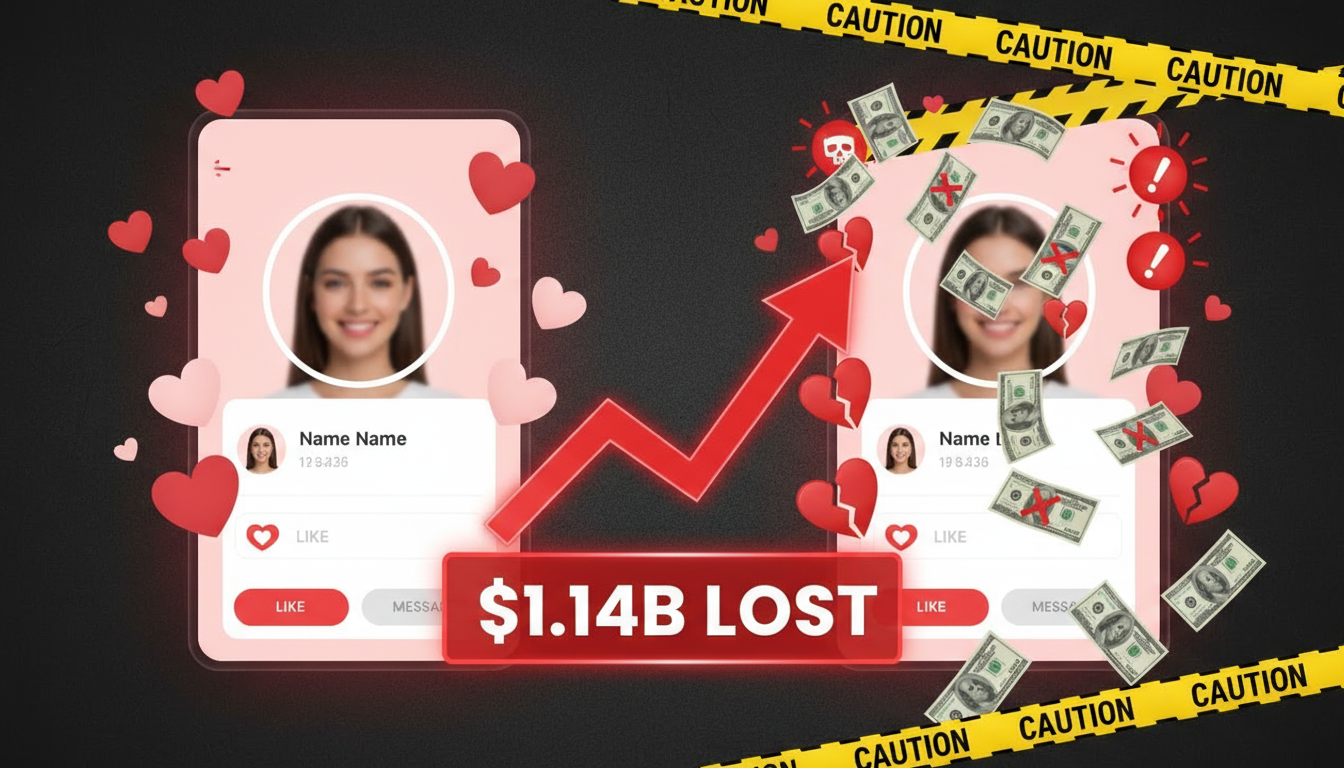
Romance scams are even worse. In 2023, romance scams rose by 22% compared to the previous year. In Australia alone, over $33 million was lost to romance scams in 2023. The median loss was nearly $10,000 per person.
Common Scam Scenarios Using Fake Profile Photos
The overseas emergency. They claim they’re stuck abroad and need money to get home. Their bank account is frozen. They can’t access their funds. Can you help?
The sick relative. A family member is in the hospital. They need money for treatment. It’s urgent. They’ll pay you back next week.
The investment opportunity. They have insider knowledge about cryptocurrency or stocks. If you invest now, you’ll make huge returns. Just send the money to this account.
The moving scam. They’re moving to your city soon. They just need money for the moving truck. Or the deposit on an apartment. Or plane tickets. Once they arrive, you can finally meet in person. Except they never arrive.
These scams work because the profile photo looks legitimate. The person seems real. And by the time you realize something’s wrong, your money is gone.
How to Protect Yourself
Do a reverse image search. Right-click on their profile photo and search Google Images. If it appears on multiple sites or profiles, it’s stolen or fake.
Look for social media. Real people have digital footprints. Check if they have Instagram, Facebook, or LinkedIn. Look at their followers. Are they real people or bots?
Video chat before meeting. Scammers will make excuses to avoid video calls. Their camera is broken. The connection is bad. They’re too shy. Don’t fall for it. If they won’t video chat, they’re hiding something.
Watch for inconsistencies. Do their stories add up? Do they contradict themselves? Real people have consistent histories. Scammers forget their lies.
Never send money. This should be obvious, but it bears repeating. Don’t send money to someone you’ve never met in person. No matter how convincing their story is.
Trust your gut. If something feels off, it probably is. Don’t ignore that feeling.
What Dating Apps Are Doing

Some platforms are fighting back. They’re using AI to detect AI-generated faces and requiring photo verification. They’re monitoring suspicious behavior patterns.
But scammers adapt quickly. As soon as one method gets blocked, they find another way in.
Some sites estimate that as many as 10% of dating profiles are fake. That means for every 10 people you see, one might not be real.
Dating apps need better verification processes. Multi-factor authentication. Social media linking. Photo verification that checks for AI generation. Real-time chat monitoring for scam patterns.
The Role of Reverse Image Search
Reverse image search is one of the most effective tools for verifying profile authenticity. Here’s how to do it:
- Save the profile photo to your device
- Go to images.google.com
- Click the camera icon
- Upload the image
- Review the results
If the photo appears on multiple dating profiles with different names, it’s fake. If it shows up on stock photo websites, it’s fake. Also, if it appears nowhere else online and the person claims to be a model or influencer, it might be AI-generated.
But here’s the problem. AI-generated photos won’t show up in reverse image searches. They’re unique. They’ve never existed before. That’s what makes them so dangerous.
Why Social Catfish Is Your Best Defense
This is where Social Catfish comes in.
Social Catfish goes beyond simple reverse image searches. They use advanced technology to detect AI-generated images. They cross-reference profiles across multiple platforms and verify identities using public records, social media, and other data sources.
When you run a search on Social Catfish, you get:
Comprehensive background checks. See if the person is who they claim to be. Check their real name, age, location, and criminal history.
Social media verification. Find all their social media accounts in one place. See if their story checks out across platforms.
Phone number lookup. Verify if the phone number they gave you is real. See who it’s registered to. Check if it’s been reported for scams.
Email verification. Find out if their email address is connected to other profiles or scam reports.
Dating profile search. See if they have profiles on multiple dating sites. Check if they’re using different names or photos.
Social Catfish has helped thousands of people avoid scams. They’ve reunited families. They’ve caught cheaters and saved people from losing their life savings to romance scammers.
Don’t wait until you’ve sent money to find out someone isn’t real. Use Social Catfish’s reverse image search to verify profile photos before you get emotionally invested. Run a reverse phone lookup to confirm their identity. Do a dating profile search to see if they’re active on multiple platforms.
Real Stories, Real Consequences
An 82-year-old man lost over $690,000 to scammers using a deepfake video of Elon Musk. A dentist from Indianapolis discovered fake profiles using her real photos across multiple dating platforms. A woman in Hong Kong lost $46 million to a romance scam using AI-generated faces.
These aren’t isolated incidents. They’re happening every day.
Scammers carefully select images that make them look approachable and fun. They steal photos from weddings, work events, and casual selfies or create elaborate backstories. They spend months building trust before asking for money.
The emotional damage is often worse than the financial loss. Victims feel violated. Embarrassed. Stupid for falling for it. But it’s not their fault. These scams are sophisticated. The technology is convincing. And scammers are experts at manipulation.
Taking Action Now
Profile photo makers have made it easier than ever for scammers to create fake identities. But you don’t have to be a victim.
Be skeptical. Ask questions. Verify information. Use tools like Social Catfish to check profiles before you trust them.
If you’re already talking to someone online, don’t ignore the red flags. If they won’t video chat, that’s a red flag, and if they ask for money, that’s a red flag. Or if their story doesn’t add up, that’s a red flag.
And if you’ve already been scammed, report it. Contact the Federal Trade Commission. File a police report. Tell the dating platform. Warn others so they don’t fall for the same scam.
The internet has made it easier to connect with people. But it’s also made it easier for scammers to exploit that connection. Stay vigilant. Stay safe. And remember that if something seems too good to be true, it probably is.