
 Multiple Faces Detected


 April 5th, 2023
Online scams have become a common threat to individuals and businesses alike. With the rise of social media, online shopping, and other digital platforms, scammers have found new and sophisticated ways to trick people into giving away their personal information or money. While the internet has made our lives easier in many ways, it has also made it easier for scammers to hide behind anonymous profiles and carry out fraudulent activities. In this blog post, we will explore the different types of online scams, how to spot them, and most importantly, how to report them to the relevant authorities.
Introduction to Online Scams
The internet has revolutionized the way we live, work, and communicate. However, it has also opened up new opportunities for scammers to take advantage of unsuspecting victims. Online scams come in many different forms, from phishing emails and fake websites to investment fraud and romance scams. These scams are designed to trick individuals into giving away their personal information or money.
One of the reasons online scams are so prevalent is that they are relatively easy to carry out. Scammers can create fake profiles or websites, and send out mass emails or messages to potential victims. They can also use social engineering tactics to convince victims to disclose their personal information or send money.
Online scams can have serious consequences for victims. They can result in financial loss, identity theft, and other types of fraud. In some cases, victims may even face legal repercussions if they unwittingly participate in a scam.
As the internet continues to play a more significant role in our daily lives, it’s essential to be aware of the risks of online scams. By understanding the different types of scams and how to spot them, individuals can take steps to protect themselves and their personal information. Additionally, reporting online scams to the relevant authorities can help to prevent scammers from carrying out further fraudulent activities.
In the following sections of this blog post, we will explore the most common types of online scams, how to spot them, and what steps you can take to protect yourself from falling victim to these scams. We will also discuss how to report online scams to the appropriate authorities and what to do if you have already fallen victim to a scam.
Common Types of Online Scams
Online scams can take many different forms, and scammers are constantly coming up with new tactics to trick victims. However, some types of scams are more common than others. In this section, we will discuss the most common types of online scams and what to look out for.
- Phishing Scams: Phishing scams typically involve an email or message that appears to be from a legitimate source, such as a bank or government agency. The message will usually ask the recipient to click on a link and enter their login credentials or personal information. However, the link will direct them to a fake website that looks like the real thing, and the scammers will use the information entered to carry out fraudulent activities.
- Lottery and Sweepstakes Scams: These scams usually involve an email or message informing the recipient that they have won a large sum of money in a lottery or sweepstakes. However, the victim will need to pay a fee or provide personal information to claim their prize, and the scammers will disappear once they have received the money or information.
- Investment Scams: Investment scams often promise high returns with little or no risk. The scammers will ask the victim to invest their money in a fake business or investment opportunity, and then disappear with the funds.
- Romance Scams: Romance scams involve a scammer creating a fake profile on a dating website or social media platform and then developing a relationship with the victim. Once the scammer has gained the victim’s trust, they will ask for money or personal information, often claiming to be in a desperate situation.
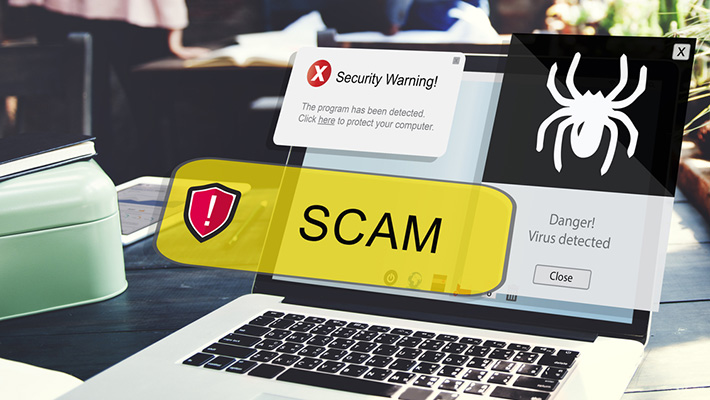
- Tech Support Scams: Tech support scams usually involve a pop-up message on the victim’s computer that claims there is a virus or other problem that needs to be fixed. The scammers will ask the victim to call a number or download software, which will give them access to the victim’s computer and personal information.
- Charity Scams: Charity scams involve scammers creating fake charities and soliciting donations from the public. The money donated will go directly to the scammers, rather than to the intended charity.
How to Spot an Online Scam
Online scams can be tricky to spot, as scammers often use sophisticated tactics to make their messages and websites appear legitimate. However, there are some common signs to watch out for that can help you identify an online scam.
If you receive an email or message from an unknown sender or a sender that seems suspicious, be wary. Look for misspellings or other errors in the sender’s email address, as scammers often create fake email addresses that are similar to legitimate ones.
Scammers often create a sense of urgency to make victims act quickly without thinking. Be wary of messages that ask you to act immediately, such as clicking on a link or sending money.
If an offer seems too good to be true, it probably is. Be skeptical of messages that promise large sums of money or other rewards for little or no effort.
Scammers often include links in their messages that direct victims to fake websites or download malicious software. Before clicking on any links, hover over them to see where they lead. If the link looks suspicious, don’t click on it.
Many online scams originate from non-English-speaking countries, and scammers often have poor spelling and grammar in their messages. Look out for messages that contain numerous spelling and grammar errors.
Be wary of messages that ask for unusual or sensitive information, such as your social security number or bank account details. Legitimate organizations would not typically request this information over email or message.
Reporting Online Scams to Authorities
Reporting online scams to the authorities is an essential step in preventing further harm and protecting others from falling victim to the same scam. If you believe you have received an online scam, follow these steps to report it to the appropriate authorities.
- Before reporting the scam, make sure to save any evidence you have, such as emails, messages, or screenshots of websites. This evidence will help the authorities investigate and prosecute the scammers.
- If you have given your bank or credit card information to a scammer, contact your bank or credit card company immediately to report the fraud and prevent further unauthorized transactions.
- The Federal Trade Commission (FTC) is responsible for protecting consumers from online scams. You can report the scam to the FTC online at ftc.gov/complaint or by calling 1-877-FTC-HELP.
- If the scam involves a significant amount of money or involves serious fraud, you can report it to the Federal Bureau of Investigation (FBI) at ic3.gov. The FBI investigates cybercrime and works with international law enforcement agencies to bring scammers to justice.
- If the scammer is located in your local area or you have been threatened with physical harm, report the scam to your local law enforcement agency.
- If the scam involves a website or service provider, report it to the website or service provider. Most legitimate websites and service providers have mechanisms in place for reporting scams and fraud.
Steps to Take if You Fall Victim to an Online Scam
Contact Your Bank
If you have given your bank or credit card information to a scammer, contact your bank or credit card company immediately to report the fraud and prevent further unauthorized transactions. Your bank or credit card company may also be able to reverse any fraudulent charges.
Change Your Passwords
If the scammer has gained access to your accounts or personal information, change your passwords immediately. Use strong, unique passwords for each account, and consider enabling two-factor authentication for added security.
Run a Virus Scan
If you clicked on any links or downloaded any files from the scammer, run a virus scan on your computer to check for malware. Remove any malware or viruses that are detected.
Report the Scam
Report the scam to the appropriate authorities, such as the FTC, the FBI, or your local law enforcement agency. Provide any evidence you have, such as emails, messages, or screenshots of websites.
Educate Yourself
Learn more about common online scams and how to spot them to prevent falling victim again in the future. Be cautious of unsolicited emails, messages, or phone calls, and never give out personal information unless you are sure it is legitimate.
Seek Support
Falling victim to an online scam can be a traumatic experience. Seek support from family, friends, or a professional counselor to help you cope with any emotional distress or anxiety caused by the scam.
Conclusion: Staying Safe Online
Staying safe online is crucial in today’s digital age where more and more activities are being conducted online. Online scams are becoming increasingly sophisticated, making it essential to be vigilant and take necessary precautions to protect ourselves and our personal information. By understanding the common types of online scams and learning how to spot them, we can take steps to avoid falling victim to these scams.
Reporting online scams to the appropriate authorities is also crucial in preventing further harm and potentially bringing scammers to justice. By saving evidence and reporting scams to the FTC, FBI, or local law enforcement agencies, we can help make the internet a safer place for everyone.
If we do fall victim to an online scam, it is important to take immediate action to minimize the damage and prevent further harm. This includes contacting our bank or credit card company, changing passwords, running a virus scan, and reporting the scam to authorities.
By staying informed and taking necessary precautions, we can stay safe online and avoid becoming victims of online scams. Remember to always be cautious of unsolicited emails, messages, or phone calls, and never give out personal information unless you are sure it is legitimate. Let’s work together to make the internet a safer place for everyone.