 Multiple Faces Detected



 March 3rd, 2026
The idea behind Happn is genuinely compelling. Instead of swiping through strangers from across the city, you connect with people you’ve already crossed paths with in real life — the person at the coffee shop, the commuter on your train, the face you keep seeing at the gym. It feels more organic, more serendipitous, and for many users, more safe.
But that sense of familiarity is exactly what scammers on the platform are counting on.
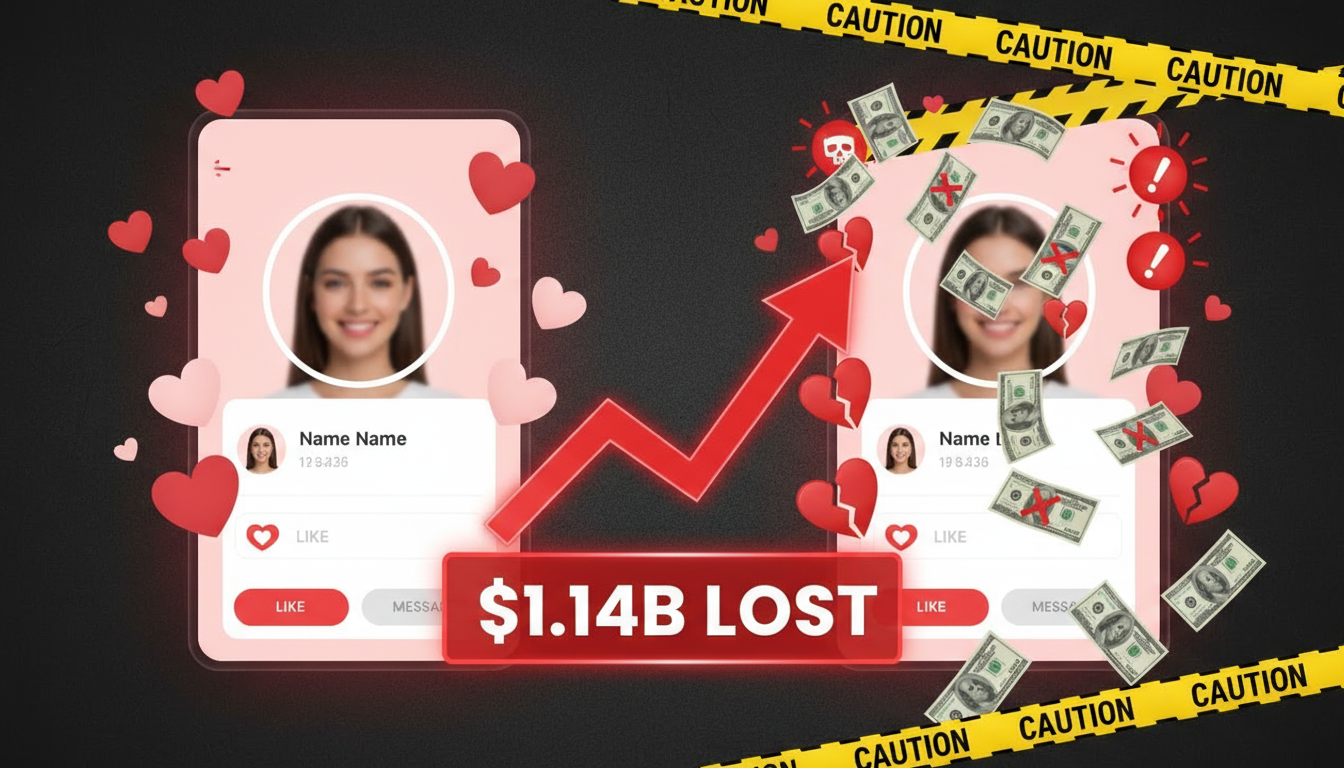
According to the FBI’s Internet Crime Complaint Center, confidence fraud and romance scams resulted in a total loss of approximately $389 million in 2024, with adults over 60 accounting for the majority of victims. And those are only the cases that were reported. Scammers haven’t ignored location-based dating apps like Happn. In fact, they exploit the app’s unique “crossed paths” mechanic to make fake connections feel more believable and personal. When someone appears to have walked the same streets as you, your guard naturally comes down.
Understanding how Happn works, how scammers abuse it, and how to verify who you’re actually talking to before things get personal is the most important step you can take as a user of the platform. Tools like Social Catfish give you a fast and reliable way to do exactly that.
How Happn Works — and Why Scammers Target It

Launched in 2014, Happn is a location-based dating app with over 140 million users worldwide. Unlike Tinder or Bumble, which match users based on general proximity or an algorithm, Happn shows you profiles of people you’ve physically crossed paths with in the last seven days. If you and another user were at the same café, park, or train station at the same time, their profile appears in your feed as a “crossed path.”
The app has genuine safety features, certified profile badges, AI-powered face detection, instant blocking and reporting tools, and a 24/7 moderation team. These are meaningful protections. But no platform is immune to determined fraudsters, and Happn’s location-based mechanic creates a specific vulnerability that scammers have learned to exploit.
The key weakness is GPS spoofing. Scammers can fake their device location to appear in your feed as though they’ve crossed paths with you locally, even when they’re operating from another country entirely. What looks like a serendipitous local connection may be a carefully engineered illusion created from thousands of miles away.
The Most Common Happn Scams
The Catfishing Scam
The most widespread scam on Happn involves a fraudster using stolen photos to create a convincing fake profile. They appear in your “crossed paths” feed, which lends immediate credibility to the connection; after all, it feels like you’ve already shared the same physical space. The scammer invests time building the relationship before eventually pivoting to a financial request, a sextortion attempt, or an effort to extract personal information.
A reverse image search on Social Catfish can reveal within minutes whether a profile photo is stolen, checking it against billions of indexed images across dating apps, social media, and known scam databases. If the same face appears under a different name elsewhere, you have your answer before the situation develops further.
The Sextortion Scam
This scam typically begins with a fast-moving, flattering conversation that quickly turns intimate. The scammer, who may be posing as an attractive local, encourages the victim to share explicit photos or engage in video calls. Once they have compromising material, the tone shifts entirely. The victim is threatened: pay up or the images will be sent to their contacts, posted online, or shared with their employer.
Sextortion reports have increased dramatically in recent years. The FBI’s Internet Crime Complaint Center documented thousands of complaints and hundreds of millions of dollars in losses from these schemes. Young men are disproportionately targeted, but victims span all ages and demographics.
The Fake Local Connection Scam
Happn’s “crossed paths” feature is designed to create authentic local connections, but scammers exploit it by spoofing GPS coordinates to appear in specific neighborhoods and cities. They fabricate detailed local knowledge referencing nearby streets, landmarks, or venues to make the connection feel genuine. Victims let their guard down because the person appears to be a real local rather than a distant stranger.
If someone claims to have crossed paths with you but their profile details, job, or school don’t match their supposed location, treat it as a red flag. A quick search on Social Catfish using their username or phone number can surface inconsistencies between what they’re claiming and what their digital footprint actually shows.
The Cryptocurrency Investment Scam
Known as pig butchering, this long-term con begins with a warm, patient romance and ends with financial devastation. After weeks of building trust, the scammer reveals that they’ve made significant returns through a cryptocurrency investment platform and want to share the opportunity with their new connection. The platform is fake. Initial “returns” are fabricated to encourage larger deposits. When the victim attempts to withdraw funds, they’re told to pay taxes or fees first, and then the scammer and the money disappear entirely.
The FBI reported that cryptocurrency investment fraud losses reached $5.8 billion in 2024, with pig butchering schemes representing a significant share. These scams are increasingly launched through dating apps, including location-based platforms like Happn.
The Blackmail Scam
A variation of the sextortion approach, but without explicit content. The scammer gathers personal information from the workplace, family details, address, and social media accounts over the course of a relationship and then uses it as leverage. They may threaten to spread false information, contact the victim’s employer, or expose fabricated claims unless payment is made.
Red Flags to Watch For on Happn
Knowing the warning signs can stop a scam before it starts. Be alert to any of the following:
- Their profile photos look professional, heavily filtered, or model-like and they only have one or two images
- They appeared in your “crossed paths” feed but can’t name specific local places or recall the supposed encounter
- The conversation moves very quickly and they express strong feelings within days
- They push to move off Happn onto WhatsApp, Telegram, or Snapchat immediately
- They always have a reason they can’t meet in person or video call
- Their messages feel scripted, generic, or could apply to anyone
- Any mention of cryptocurrency, investments, or financial opportunities
- Requests for money, gift cards, or bank transfers no matter how the story is framed
- They ask for explicit photos or suggest moving to a video platform quickly
- Grammatical inconsistencies or phrases that feel translated
If two or more of these apply, stop the conversation and run a search before going any further. Upload their profile photo to Social Catfish. If the image is being used across multiple platforms under different names, it will surface within seconds.
What Makes Happn Scams Feel More Personal
This is the element that makes Happn scams uniquely dangerous compared to other dating app fraud: the false sense of shared reality. On a standard dating app, you know you’re meeting a stranger. On Happn, you feel like you’ve already shared a moment with this person, even if that moment was manufactured.
Scammers weaponize this. They reference the neighborhood, mention local spots, and build a narrative of coincidence and fate that makes the connection feel destined rather than digital. Victims are psychologically primed to trust the interaction because it feels fundamentally different from a cold online match. That trust, once established, is harder to shake even when warning signs appear.
This is why verifying identity on Happn matters more than most users realize, not after something has gone wrong, but before you’ve invested emotionally in the connection.
How to Protect Yourself on Happn

Reverse Image Search
One of the fastest and most effective ways to catch a scammer before things go further. Upload any profile photo to Social Catfish’s reverse image search, and it scans billions of indexed images to find where else that photo appears online.
- Identifies stolen photos being used across multiple profiles
- Reveals if the same face appears under a different name on other platforms
- Takes minutes and can save you from weeks of emotional investment in a fake connection
Reverse Phone Lookup
If a match gives you their phone number early, which scammers often do to move the conversation off the app, search it through Social Catfish before responding.
- Reveals the real name and location history tied to the number
- Surfaces any social profiles linked to that phone number
- Quickly exposes inconsistencies between what someone claims and who they really are
Reverse Email Search
Scammers frequently reuse the same email address across multiple fake personas. Social Catfish’s reverse email search cross-references an address against social media profiles, usernames, and public records.
- Confirms who the email address really belongs to
- Reveals connected social accounts and online identities
- Flags inconsistencies between the email and the person’s claimed identity
Username Search
Many scammers reuse the same username across multiple dating apps and platforms. Social Catfish’s username search scans dozens of platforms simultaneously.
- Maps out a person’s full online presence across dating apps, forums, and social media
- Identifies if the same username appears under a completely different identity elsewhere
- One of the most underused but effective verification steps available
Name Search
Even a first and last name is enough to start building a picture of who you’re actually dealing with.
- Cross-references public records, social media, and court records
- Verifies whether someone’s claimed profession, location, and background are consistent
- Surfaces information that doesn’t match the story they’ve told you
What to Do If You’ve Been Scammed on Happn
If you believe you’ve fallen victim to a scam, take immediate action. Stop all communication with the person and do not send any additional money or content, even if they claim it will resolve the situation. Screenshot all conversations, profile information, and payment records before blocking the account. Report the profile to Happn directly through the in-app reporting tool by pressing the three dots on the user’s profile. File a report with the FTC at ReportFraud.ftc.gov. If cryptocurrency was involved, report to the FBI’s Internet Crime Complaint Center at ic3.gov.
Frequently Asked Questions
Happn has legitimate safety features, including certified profile badges, AI-powered face detection, and a 24/7 moderation team. However, no dating app is completely free of scammers. GPS spoofing, fake profiles, and catfishing do occur on the platform. Using Happn’s built-in safety tools alongside independent verification through Social Catfish gives you the strongest protection.
Yes. Scammers can use GPS spoofing tools to manipulate their device’s location and appear in your “crossed paths” feed as a local connection, even when operating from another country. This is one of the most common tactics used to exploit Happn’s location-based matching system.
Watch for overly polished or limited photos, generic messages, reluctance to video call, pressure to move off the app quickly, and any mention of financial opportunities or emergencies. Run their profile photo through Social Catfish’s reverse image search to check whether the image has been stolen from someone else online.
Decline immediately and treat it as a serious red flag. Legitimate people do not ask for money from someone they’ve met on a dating app. Block and report the account to Happn, and file a report with the FTC at ReportFraud.ftc.gov. Do not send anything, regardless of how urgent or convincing the story sounds.
GPS spoofing involves manipulating a device’s location data so that it registers a false position. On Happn, scammers use this to appear in the “crossed paths” feeds of users in specific cities or neighborhoods, creating the illusion of a local connection when they may be operating from abroad. Testing someone’s genuine local knowledge early in a conversation is one of the most effective ways to identify this tactic.
The Bottom Line
Happn’s location-based mechanic is what makes it unique, and it’s also what makes its scams feel more convincing than those on other dating apps. The sense of shared physical reality that the platform creates is powerful, and fraudsters have learned to manufacture it deliberately.
The good news is that the most effective protective measures are simple and take only minutes. Verify profile photos before you invest emotionally. Test local knowledge early. Use the platform’s certified profile features. And hold firmly to one non-negotiable rule: never send money or intimate content to someone you haven’t met and verified in person.
If a match ever gives you pause, don’t dismiss that instinct. Run a search on Social Catfish before the connection gets personal. A few minutes of verification now is infinitely better than the alternative.